Volcanic aerosol cooling
Big eruptions loft sulfur gases that become a haze of tiny droplets high in the stratosphere, reflecting sunlight and cooling the planet.
An aerosol is a haze of tiny particles or droplets suspended in air. The most important for climate come from large explosive volcanic eruptions, which blast sulfur dioxide high into the stratosphere, above the weather. There it combines with water to form tiny droplets of sulfuric acid, sulfate aerosols, within weeks.
These droplets reflect sunlight well. A thin veil spreads around the globe and sends part of the incoming sunshine back to space before it reaches the ground. With no rain in the stratosphere to wash them out, they can stay up for several years, and the surface cools meanwhile. The haze also makes for vivid sunsets.
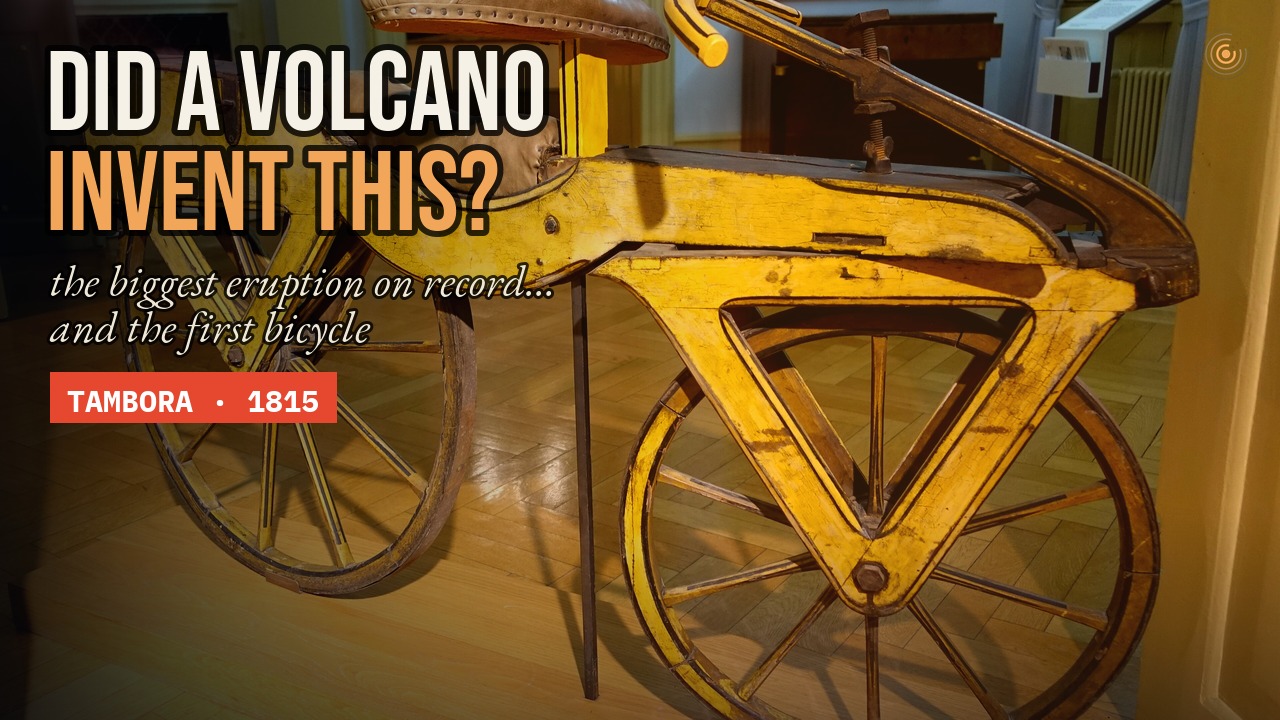
The 1991 eruption of Mount Pinatubo in the Philippines cooled the world's climate by about 0.5 °C for a few years. Climate scientists treated it as a natural experiment for testing their computer models. The eruption of Tambora in Indonesia in 1815 was far larger, and brought on the "year without a summer" of 1816, with failed harvests in parts of Europe and North America.
Where the gas goes matters. Sulfur that stays in the lower atmosphere is washed out much sooner and has less effect on global climate, but it can create a choking, poisonous haze at ground level, as the 1783 Laki eruption in Iceland did over much of Europe.