Atmospheric escape
How a planet slowly loses its air to space: light gases like hydrogen get away fastest, especially without a magnetic field.
Atmospheric escape is the slow loss of a planet's air to space. Molecules at the top of an atmosphere move fast; the lightest, such as hydrogen, can reach escape speed, and the solar wind (the stream of charged particles from the Sun) can strip charged atoms away. Sunlight helps by splitting molecules like water into hydrogen and oxygen first.
An everyday picture: a balloon left for days goes soft because the smallest molecules slip out first. Light gases leak faster than heavy ones.
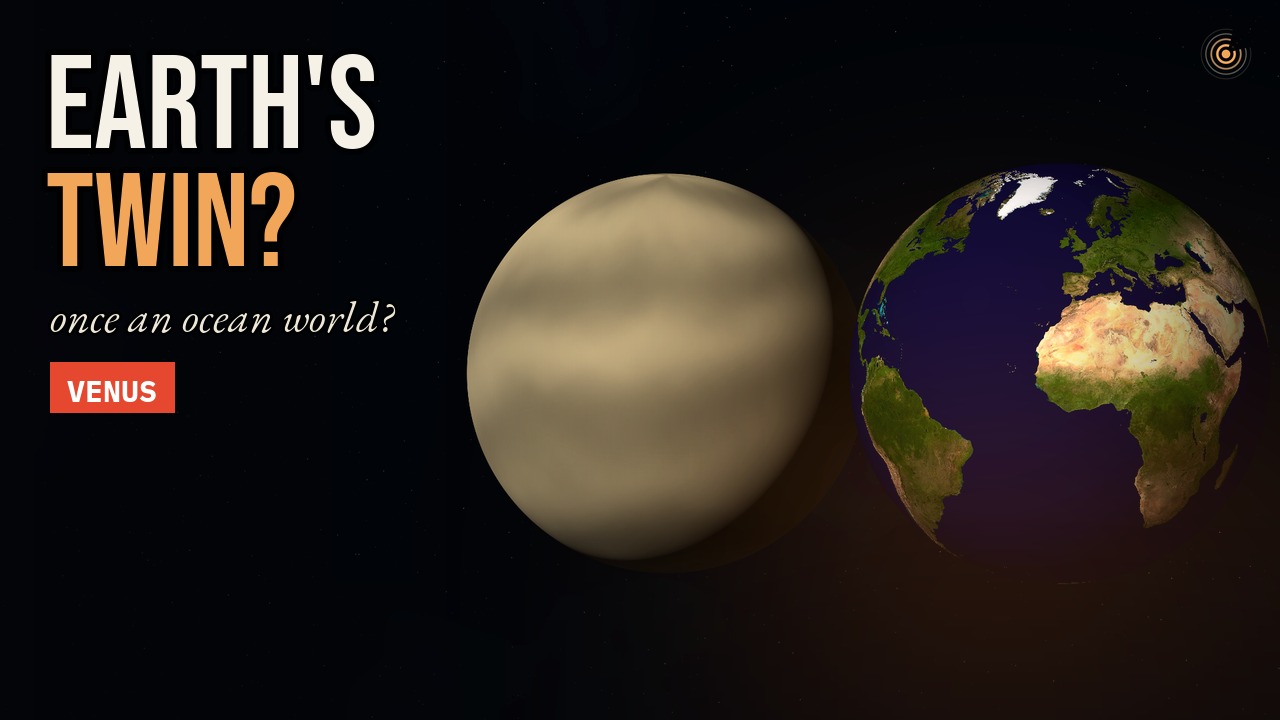
Because ordinary hydrogen escapes more easily than heavy hydrogen (deuterium), the leftover hydrogen gets richer in deuterium. On Venus, the share of deuterium is about 100 times that of Earth's oceans, and Europe's Venus Express saw hydrogen and oxygen leaving in a ratio of about 2 to 1, the recipe of water.
A common misconception is that a magnetic field alone decides whether a planet keeps its air. Gravity, temperature and sunlight matter too; Venus kept a thick atmosphere without one, but lost most of its water.