Epigenetics
Chemical tags on DNA that switch genes on or off without changing the genetic code itself, and that can shift with age and environment.
Epigenetics is the study of changes in how genes are used that do not alter the DNA sequence itself. Almost every cell in your body carries the same genetic code, yet a nerve cell and a skin cell behave completely differently. The difference lies in which genes are switched on, and part of that switching is done by chemical marks on the DNA and the proteins it is wrapped around. The full set of these marks in a cell is its epigenome.
The best-known mark is DNA methylation: a small chemical group, a methyl group (one carbon atom and three hydrogens), attaches to the DNA letter C, usually where it is followed by a G. Heavily methylated stretches of DNA tend to be silenced. Some marks are copied when a cell divides, so a liver cell's daughters stay liver cells.
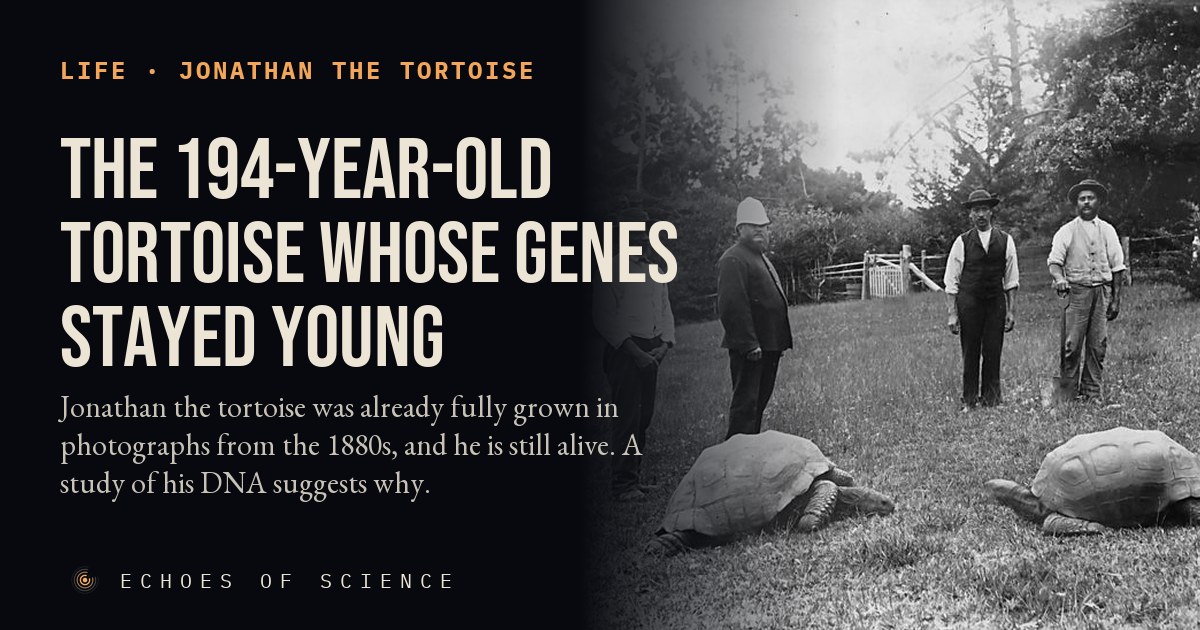
Methylation patterns drift as an animal ages, so reliably that scientists can build "epigenetic clocks" that estimate age from a blood sample. In 2026, a study found that the switches on DNA-repair and energy genes in Jonathan, a giant tortoise thought to be about 194, still resembled those of younger tortoises.
A common misconception is that epigenetic changes rewrite your genes. They do not: the code stays the same, and only how it is read changes.