Meteor shower
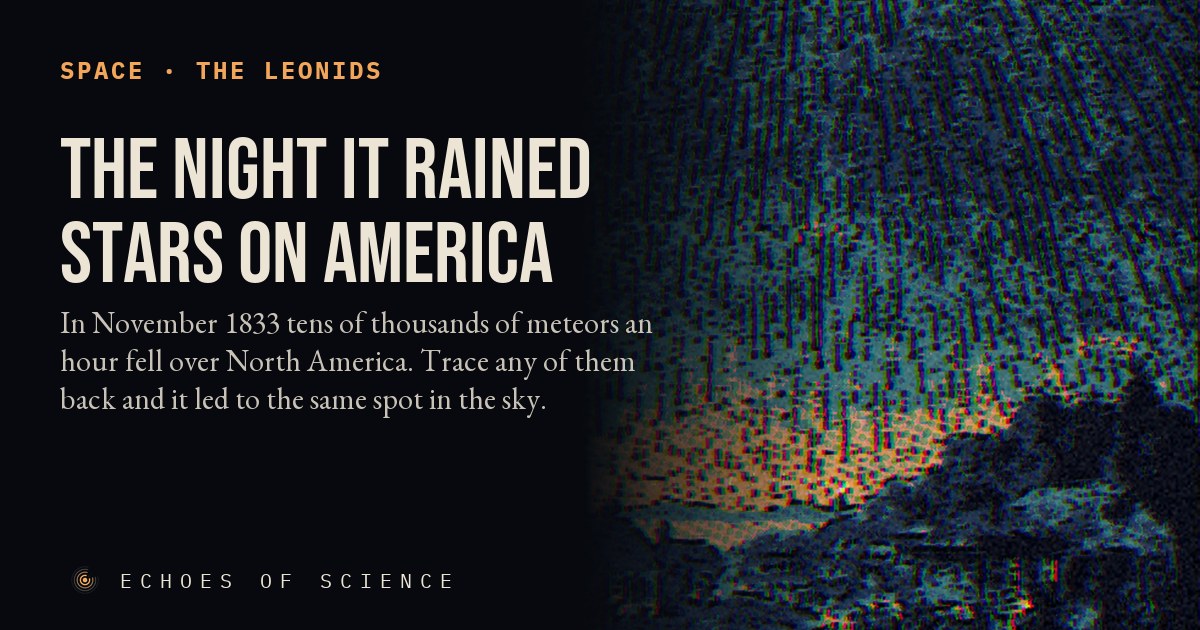
When Earth crosses the dust trail of a comet, grains burn up in the air as meteors that seem to stream from one point: the radiant.
A meteor shower happens when Earth passes through a stream of dust and grit shed by a comet (or occasionally an asteroid). The grains are mostly tiny, but they hit the atmosphere very fast, often tens of kilometres a second, and heat the air around them until it glows. Each glowing streak is a meteor.
Because all the grains in a stream travel in parallel, perspective makes their paths appear to spread out from a single point in the sky, the radiant, just as parallel railway lines seem to meet at the horizon. Showers are named after the constellation that holds the radiant: the Leonids come from Leo, the Perseids from Perseus.
Example: every November Earth crosses the orbit of comet Tempel-Tuttle, and the Leonids hit the air at about 71 km a second. A normal year brings perhaps 10-15 an hour from a dark site; a meteor storm, when Earth meets a dense fresh trail, can bring over 1,000 an hour.
A common misconception is that you should stare at the radiant. Meteors appear all over the sky; those near the radiant look short, so it is better to look a little away from it.