Pollination
Moving pollen from a flower's male parts to the female stigma so seeds and fruit can form; insects, wind, birds or human hands can do it.
Pollination is the transfer of pollen, which carries a plant's male cells, onto the stigma, the receptive female surface of a flower. Each pollen grain then grows a thin tube down into the ovary and fertilises an ovule, which becomes a seed, while the ovary swells into a fruit.
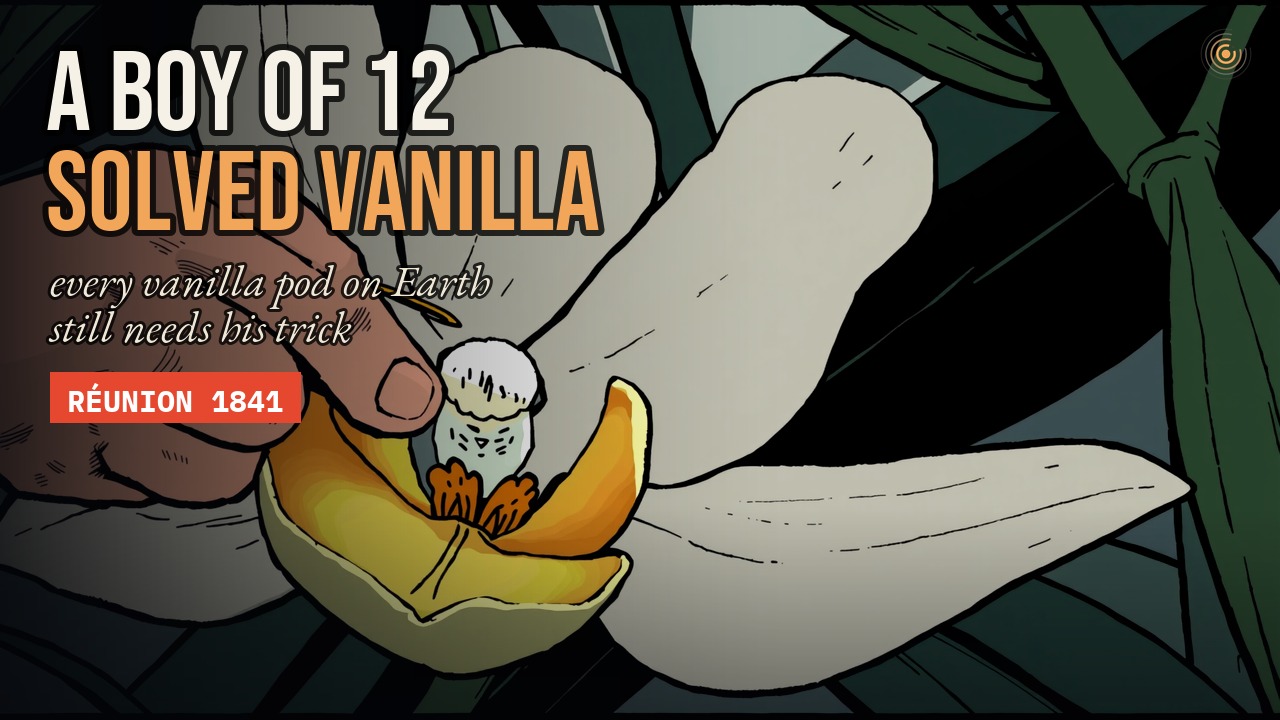
Many flowers favour cross-pollination, pollen from another plant, because mixing genes makes offspring more varied. Some have barriers against self-pollination: in a vanilla orchid a flap of tissue called the rostellum separates its own pollen from its stigma, so without the right visitor nothing happens.
When pollinators are missing, people do the job. Every vanilla flower on commercial farms is pollinated by hand, and it takes about 600 hand-pollinated flowers to make one kilogram of cured beans. Gardeners do the same with squash and melons by carrying pollen from male to female flowers.
A common misconception is that bees pollinate every flower they visit. Many visits are "illegitimate": the insect takes food without touching the parts that matter. A 2024 study in Mexico found that bees long credited with pollinating vanilla never visited its flowers.