Positive feedback
A loop in which a change strengthens the very process that caused it, so it grows faster and faster until something runs out or breaks.
In positive feedback, an outcome feeds back into its own cause and makes it stronger. A small change therefore grows in the same direction, often faster and faster, until a limit is reached. The everyday example is the howl of a microphone held near its own loudspeaker: the sound is picked up, amplified, played again and picked up louder.
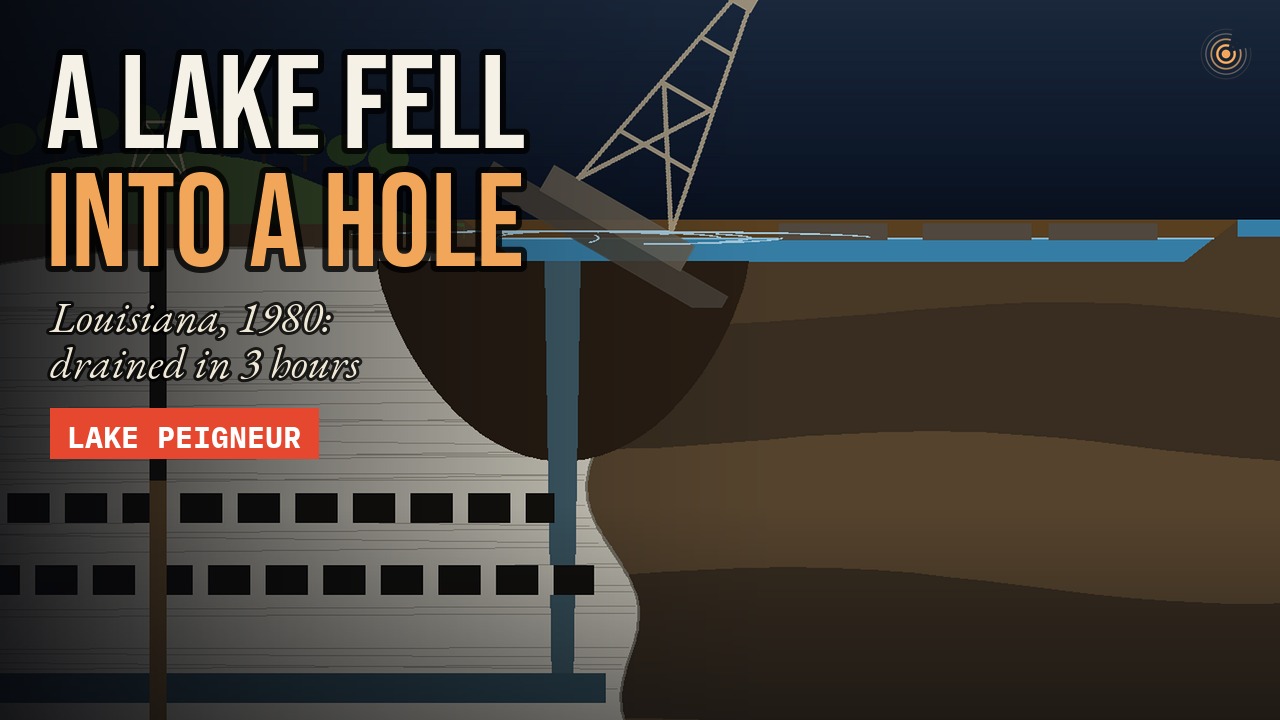
Positive feedback turned a leak into a disaster at Lake Peigneur in 1980. Fresh water flowing into a salt mine dissolved the salt around the hole, so the hole widened; a wider hole let in more water, which dissolved even more salt. A rock salt pillar can lose about 360 grams of salt to every litre of fresh water that touches it. Within about three hours a lake of more than 1,000 acres had drained away.
The same pattern appears in electronics as thermal runaway, in epidemics and in viral videos. It is not always bad: it also drives the rapid rise of a nerve impulse and the contractions of childbirth. Its opposite, negative feedback, pushes a system back towards a steady state.