Runaway greenhouse
A warming loop in which heat evaporates water, the water vapour traps more heat, and a planet's oceans end up boiling away.
A runaway greenhouse is a feedback loop on a wet planet. Warmer air holds more water vapour; water vapour is a greenhouse gas, so it traps more heat; the air warms further and still more water evaporates. Past a certain amount of absorbed sunlight the loop cannot settle down, and the oceans boil off into a thick steam atmosphere. High up, sunlight splits the water and the light hydrogen escapes to space, so the water is lost for good.
An everyday picture: a pan of water on a hob that is turned up a little too far. Below a certain setting it simmers steadily; above it, it boils dry.
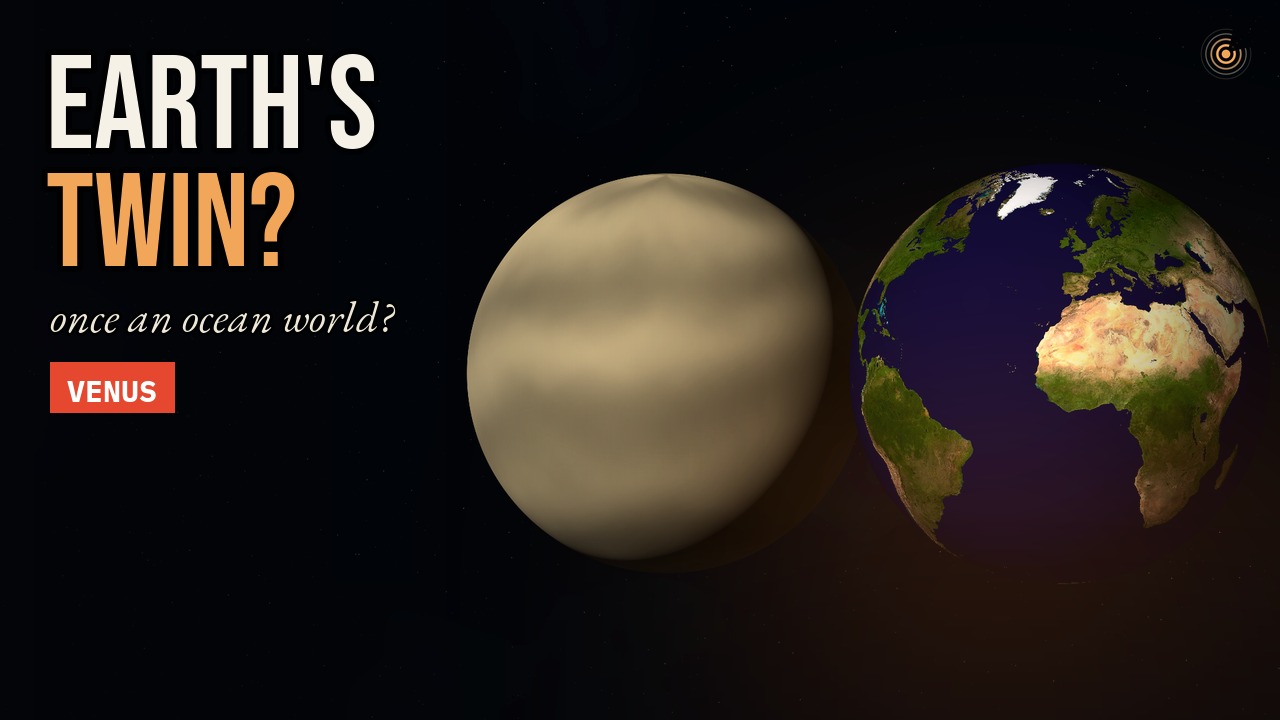
For a wet, Earth-like planet, models put the limit at roughly 286 watts of absorbed sunlight per square metre (averaged over the planet). The Earth today absorbs about 240. Venus gets about 1.9 times Earth's sunlight, which is why scientists think it went through a runaway greenhouse at some point, if it was ever wet.
A common misconception is that Venus is hot only because it is closer to the Sun. Its thick carbon dioxide air does most of the work: Mercury, much closer, is cooler by day.