Albedo
The share of sunlight a planet or surface reflects back. Bright clouds and ice have a high albedo; dark rock and open sea a low one.
Albedo is the fraction of incoming sunlight that a surface or a whole planet reflects instead of absorbing. It runs from 0 (absorbs everything) to 1 (reflects everything). What is reflected cannot warm the planet, so albedo is one of the main dials on a climate.
An everyday example: on a sunny day a white car stays cooler than a black one, and a white T-shirt feels cooler than a dark one.
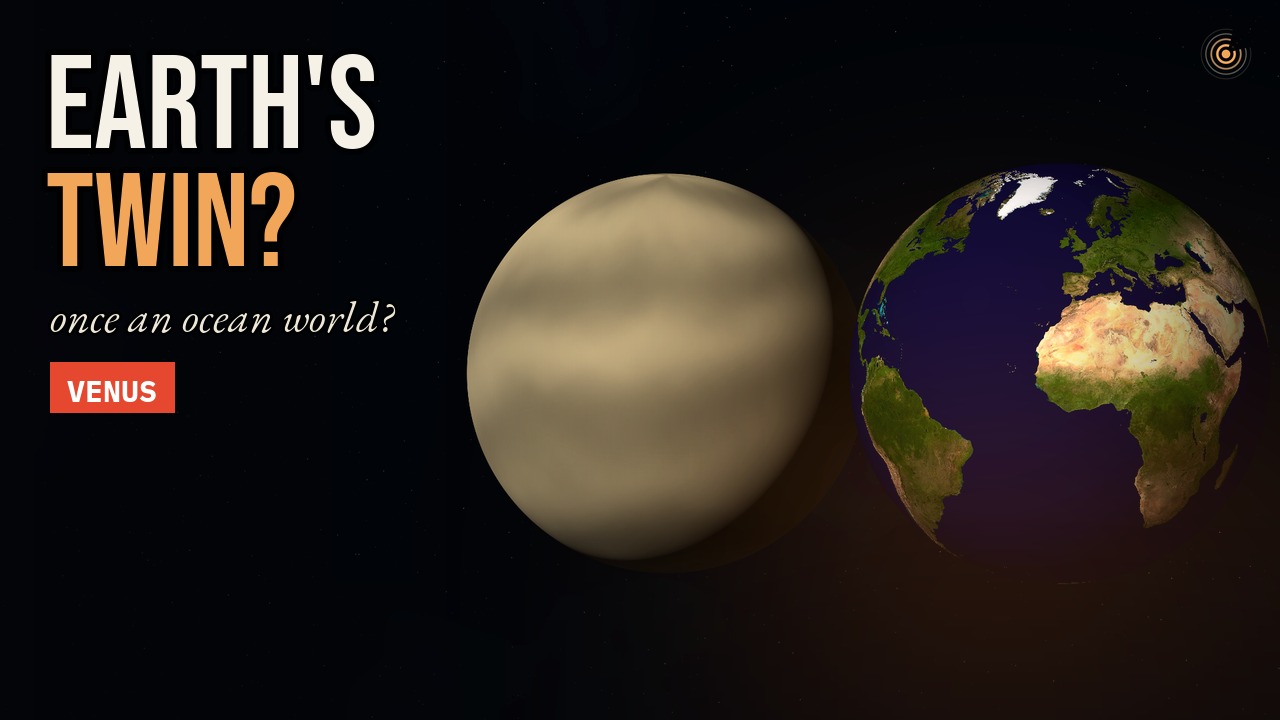
The Earth reflects about 29% of the sunlight that reaches it. Venus, wrapped in bright clouds, reflects about 77%: the highest of the planets. In one climate model, a young Venus could have kept an ocean because its slow spin built thick, bright clouds on the day side.
A common misconception is that a high albedo means a cold planet. Venus reflects most sunlight yet is the hottest planet, because its thick carbon dioxide air traps the heat that does get in.