Demographic transition
The shift from high birth and death rates to low ones: deaths fall first, the population booms, then families get smaller and growth slows.
The demographic transition is the change a society goes through as it moves from high birth and death rates to low ones. Death rates, especially of children, usually fall first; while birth rates stay high, the population grows quickly. A generation or two later, birth rates fall too, and growth slows.
An everyday way to see it: when parents can expect their children to survive, many choose to have fewer of them.
In Sweden before 1800, more than one baby in five died before its first birthday. Worldwide, the fertility rate was about 5 children per woman until 1965 and is about 2.25 today. Bangladesh fell from about 6.9 in the early 1970s to 2.0 by 2020; Iran dropped from more than six to fewer than three in about ten years. About 2.1 children per woman is called the replacement level.
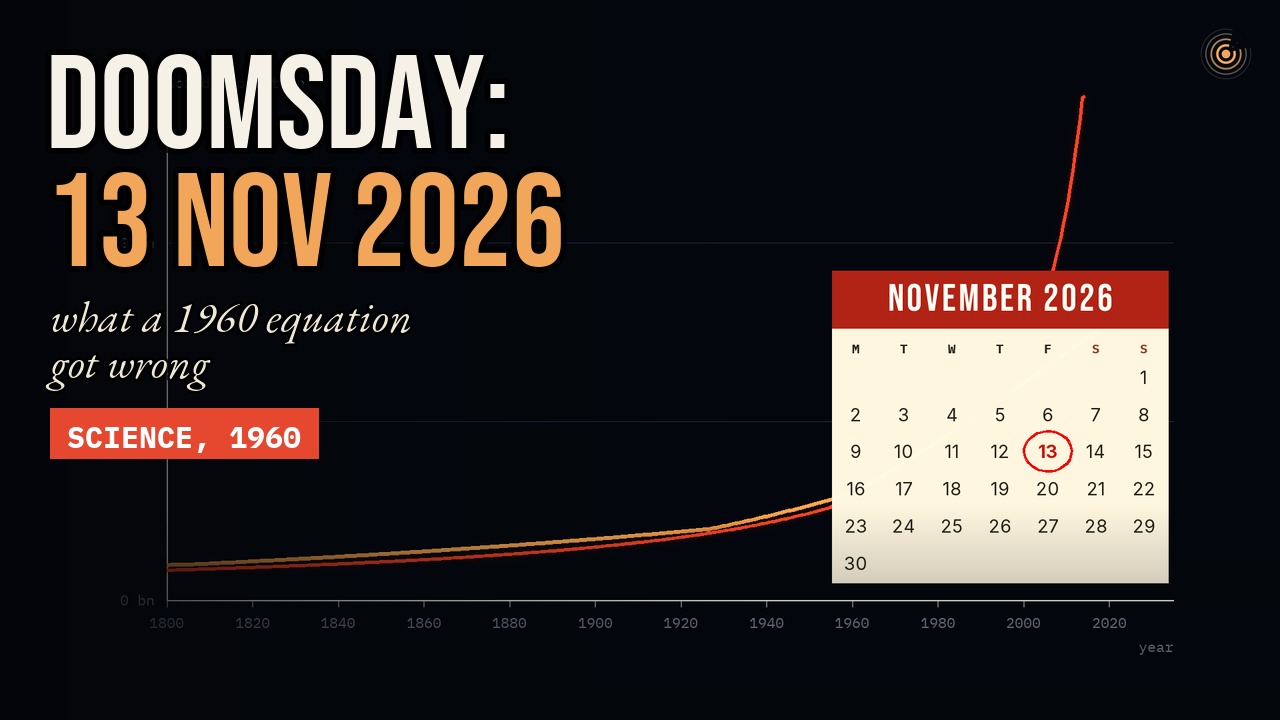
A common misconception is that rapid population growth goes on forever. Our World in Data calls the population boom a temporary event.