Electromagnetic induction
A changing magnetic field drives an electric current in a nearby wire: the principle behind generators, transformers and solar-storm surges.
Electromagnetic induction is the creation of a voltage, and so a current, in a conductor when the magnetic field through it changes. Michael Faraday published the discovery in 1831; the American Joseph Henry found it independently in 1832.
The key word is change. A magnet sitting still beside a coil of wire produces nothing. Move the magnet, switch an electromagnet on or off, or spin the coil, and a current flows. Faraday's law says the induced voltage equals the rate at which the magnetic field through the circuit changes, so faster changes give bigger voltages. Lenz's law adds that the induced current always flows in the direction that opposes the change that caused it.
Most of our electricity is made this way: a power station's generator turns coils and magnets past each other. Transformers use a changing current in one coil to induce a voltage in another, and induction hobs and wireless phone chargers work on the same principle.
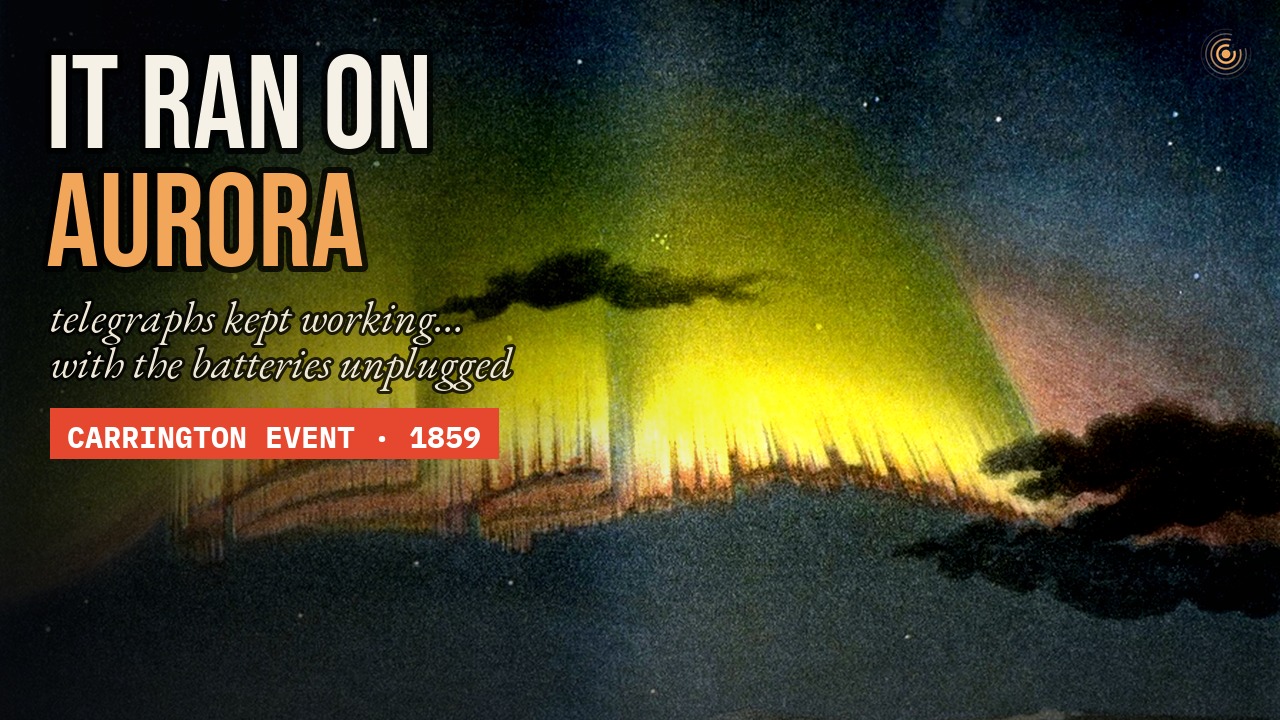
Nature can do it on a grand scale. During a geomagnetic storm, Earth's magnetic field shifts and shudders, and the changes induce currents in long conductors such as telegraph wires, power lines and pipelines. Magnetic sea mines, designed to fire when the field around them changes as a steel ship passes, can be fooled the same way.
A common misconception is that a strong magnet on its own generates electricity. Only a changing magnetic field does.