Geomagnetic storm
A disturbance of Earth's magnetic field caused by a blast of solar plasma, bringing aurorae far from the poles and surges in long wires.
Earth's magnetic field, generated by churning molten iron in the planet's outer core, reaches far out into space and deflects most of the solar wind, the stream of charged particles flowing from the Sun. A geomagnetic storm is a temporary disturbance of that magnetic shield. It is usually triggered when a coronal mass ejection, a vast cloud of solar plasma carrying its own magnetic field, slams into it. Storms are strongest when the incoming field points southward, letting energy pour in.
A storm typically has a sudden start, a main phase of a few hours in which the field at the ground weakens, and a recovery that can take up to a week. Charged particles rain into the upper atmosphere, and aurorae spread far from their usual polar zones.
Rapid changes in the field also induce electric currents in long conductors. During the Carrington Event of 1859, telegraph lines in Europe and North America surged, shocking operators and starting fires, and aurorae were seen as far south as Hawaii. In March 1989 a storm collapsed the Hydro-Québec power grid in Canada within seconds, leaving six million people without electricity for nine hours.
Storms can also damage satellites and disrupt radio communication and satellite navigation, so space-weather forecasters watch the Sun for eruptions heading our way.
See it in action
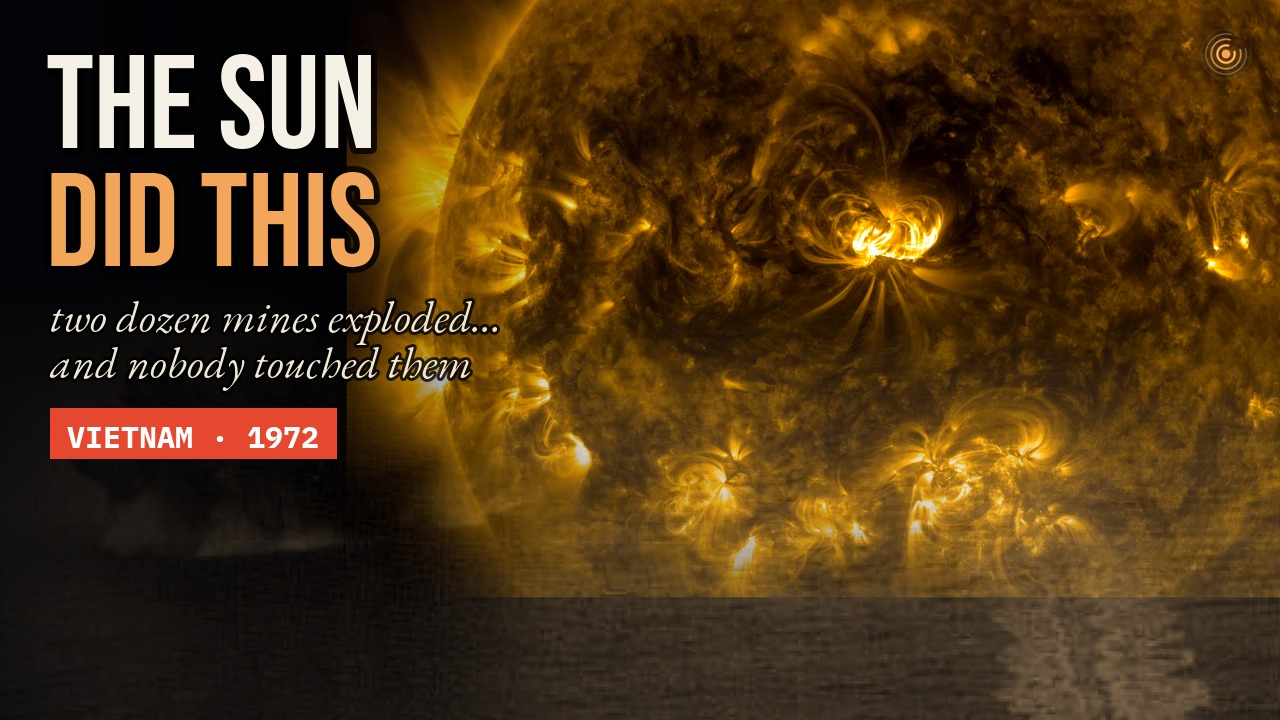 Watch nowThe Day the Sun Blew Up a Minefield4 Aug 1972 · Hon La, North Vietnam
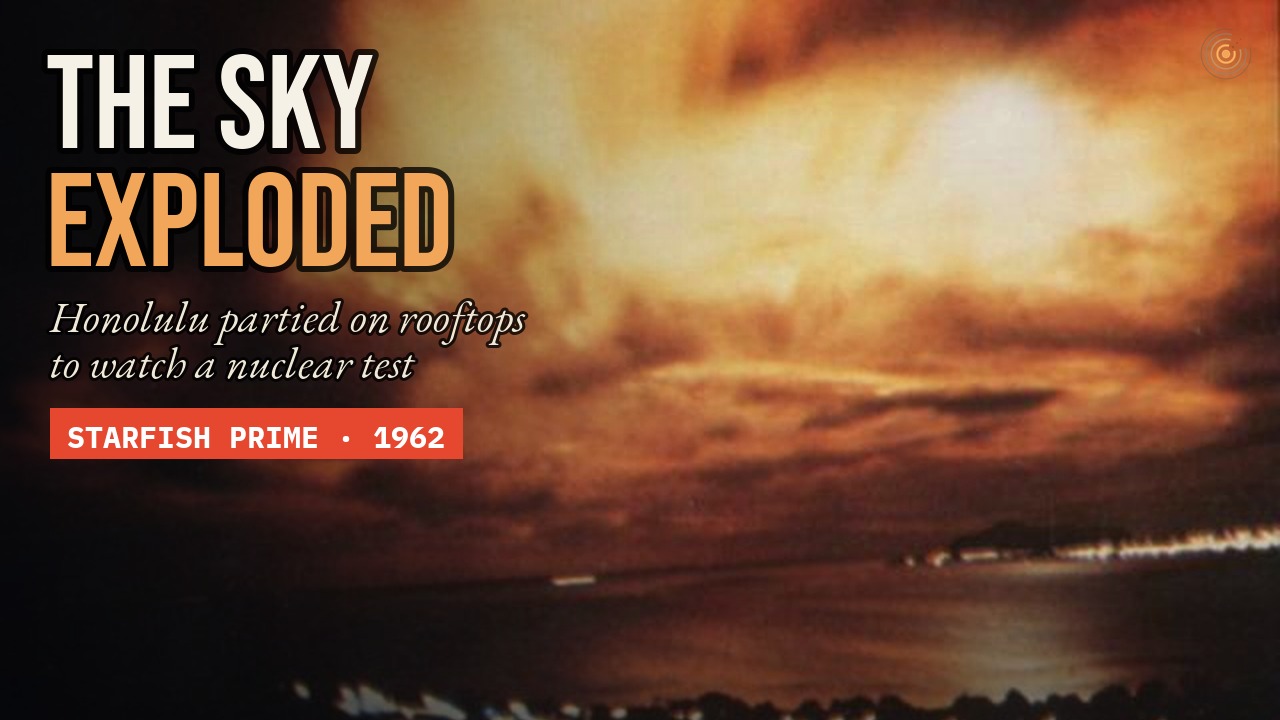 Watch nowThe Night America Nuked the Sky8 Jul 1962, 11 pm Honolulu time · 400 km above Johnston Island
 Coming soonThis Knowledge Was Free All Along1968–2026 · public archives worldwide
Coming up in future stories
- The Solar Storm That Sent Tractors in Circles 10–12 May 2024 · US Midwest and Great Plains