Expansion of the universe
Space itself is stretching: galaxies far away move away from us faster than near ones, which is the core evidence for the Big Bang.
The expansion of the universe means that the distances between distant galaxies grow over time, not because galaxies fly through space but because space itself stretches. In 1929 Edwin Hubble showed that the farther away a galaxy is, the faster it moves away from us. Run that motion backward and everything converges on a hot, dense past: the Big Bang.
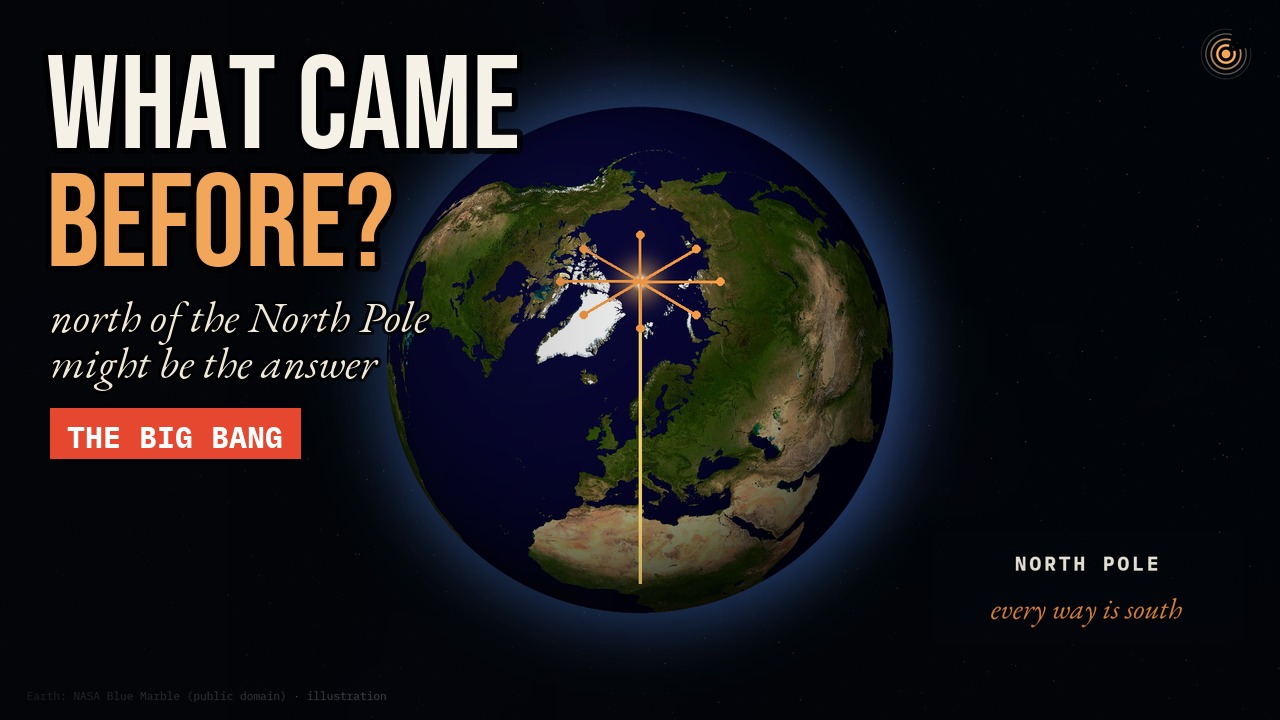
An everyday picture is raisin bread rising in the oven: every raisin sees all the others move away, and the farthest ones fastest. No raisin is the centre. Today's expansion rate is about 70 kilometres per second for every megaparsec (about 3.26 million light-years) of distance, so a galaxy 100 megaparsecs away recedes at roughly 7,000 km/s.
A common misconception is that the Big Bang was an explosion from one spot into empty space. There is no centre and no edge. An open puzzle is the Hubble tension: measurements from the early universe give about 67 km/s per megaparsec, measurements of nearby stars and supernovae about 73.
See it in action
Coming up in future stories
- A Belgian Priest Found the Expanding Universe First 1927 · Leuven and the Solvay Conference, Brussels