Ion propulsion
Ion engines push a spacecraft by firing charged atoms out at very high speed: a tiny thrust, but extremely fuel-efficient over months and years.
Ion propulsion is a way of moving spacecraft with electricity instead of burning fuel. The engine strips electrons from a gas, usually xenon, to make positive ions, then accelerates them through electrically charged grids and shoots them out of the back many times faster than the exhaust of a chemical rocket.
The push is tiny. JAXA's microwave ion engines, about 10 cm across, produce around 10 millinewtons, roughly the weight of a paper clip resting on your hand. But because the exhaust is so fast, very little propellant is used, and the engine can run for months. Over years, that gentle push adds up to a bigger change in speed than a chemical rocket of the same mass could give.
Because only positive ions leave, every ion engine needs a neutraliser that sprays electrons into the beam; otherwise the spacecraft would build up charge and pull its own exhaust back.
A common misconception is that ion engines are a way to launch from Earth. They are far too weak to lift anything off the ground: they only work in space, once a rocket has done the heavy lifting.
See it in action
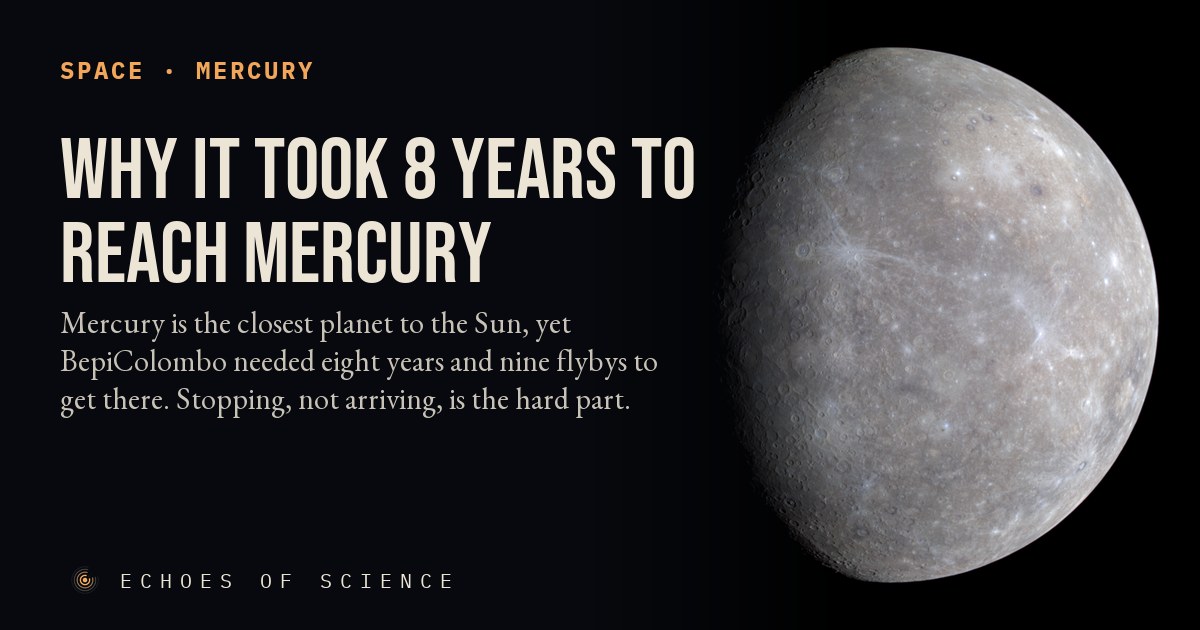 Coming soonWhy It Took 8 Years to Reach Mercury2018–2026 · BepiColombo (ESA/JAXA), launched 20 Oct 2018; capture at Mercury scheduled 21 Nov 2026
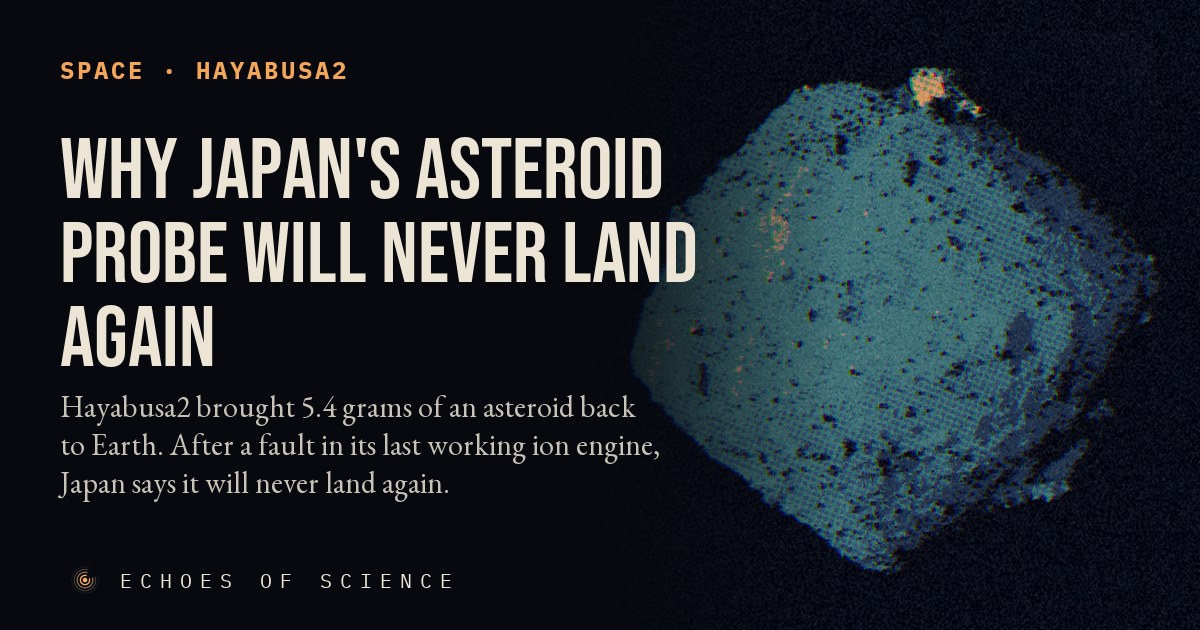 Coming soonWhy Japan's Asteroid Probe Will Never Land AgainAnnounced 17 November 2026 · mission launched 2014
Coming up in future stories
- The Broken Probe That Limped Home With Asteroid Dust 2003-13 June 2010 · asteroid Itokawa to Woomera, Australia