Mark-to-market accounting
Valuing assets and contracts at their current market (or estimated) value; for long contracts it can mean booking forecast profits up front.
Mark-to-market accounting values an asset or a contract at what it is worth now, rather than at what was paid for it. For shares traded every day this is easy and honest: the price is on the screen.
For a long contract with no market price, the 'value now' has to be estimated, usually as the present value of the profits the contract is expected to bring. Under mark-to-market, that estimate can be reported as income when the contract is signed. In January 1992 the US Securities and Exchange Commission allowed Enron to use it for its natural-gas trading, and Enron later applied it to much longer and less certain deals.
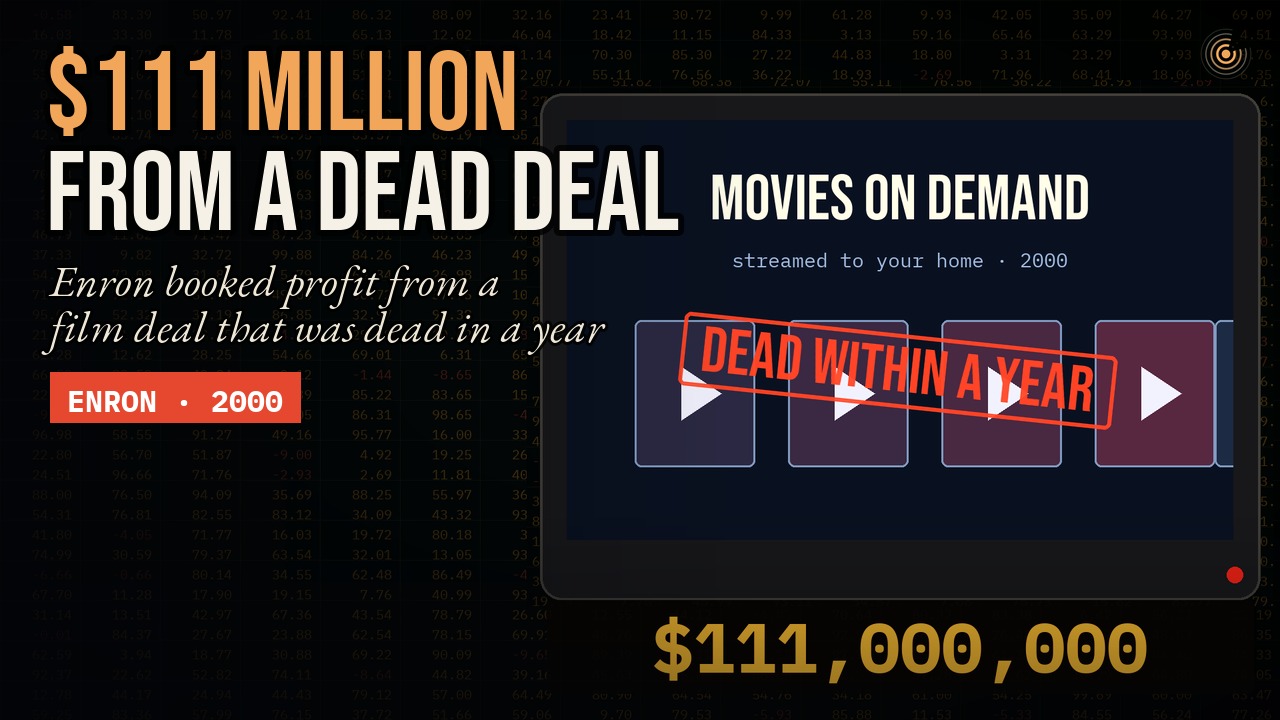
The risk: whoever makes the forecast effectively decides the profit, and next year's growth has to come from new, bigger deals, because the old ones are already counted. In 2000–2001 Enron recognised $111 million from a video-on-demand venture with Blockbuster that ended within a year.
A misconception is that mark-to-market is itself fraud. It is a standard, widely used method; the problems come when estimates are unchecked or deliberately optimistic.