Present value
What a future payment is worth today: money promised later is worth less than money now, so each future amount is divided down by an interest rate.
Present value answers a simple question: what is a payment in the future worth to me today? Money now can be saved or invested, so a euro promised in a year is worth a little less than a euro in your hand. To compare them, future amounts are discounted: divided by (1 + r) for every year you have to wait, where r is an interest rate.
An everyday example: at 5% a year, 100 euros promised in one year is worth about 95.24 euros today, and 100 euros in ten years is worth about 61 euros today. Add up the present values of a whole stream of payments and you get the value of a contract, a bond or a pension today. Twenty yearly payments of 10 million at 5% are worth about 124.6 million now.
The catch is that the answer depends on two guesses: how big the future payments will be, and which rate to use. Change either a little and the value today can change a lot.
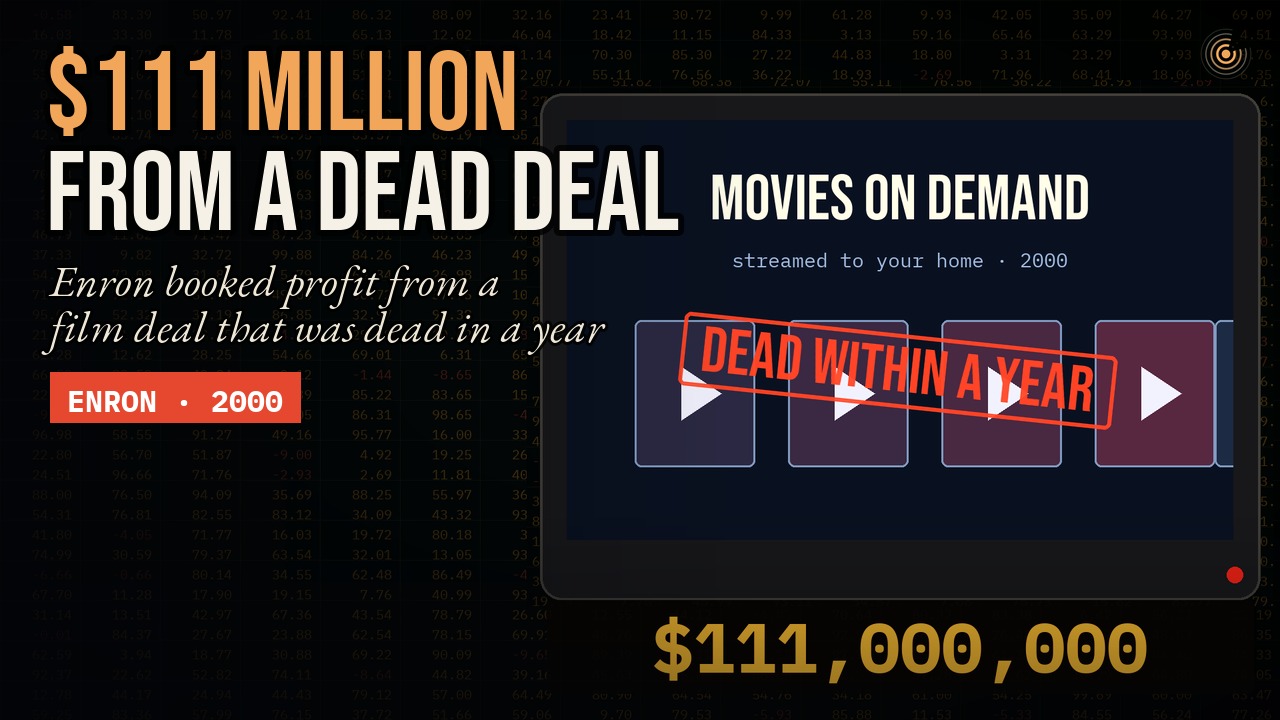
A common misconception is that a present value is a fact. It is a calculation built on forecasts. That is why accounting that books present values as profit, as Enron did with mark-to-market accounting, needs someone independent to check the forecasts.