Structural colour
Colour made by the shape of a material rather than by pigment: tiny repeating layers or ridges that reflect one wavelength much more strongly than others.
Structural colour comes from geometry, not chemistry. When light meets a stack of very thin layers, each boundary reflects a little of it. For most wavelengths those small reflections arrive out of step and cancel out. For one wavelength, set by the thickness and spacing of the layers, they arrive in step and add up, so that colour is reflected strongly.
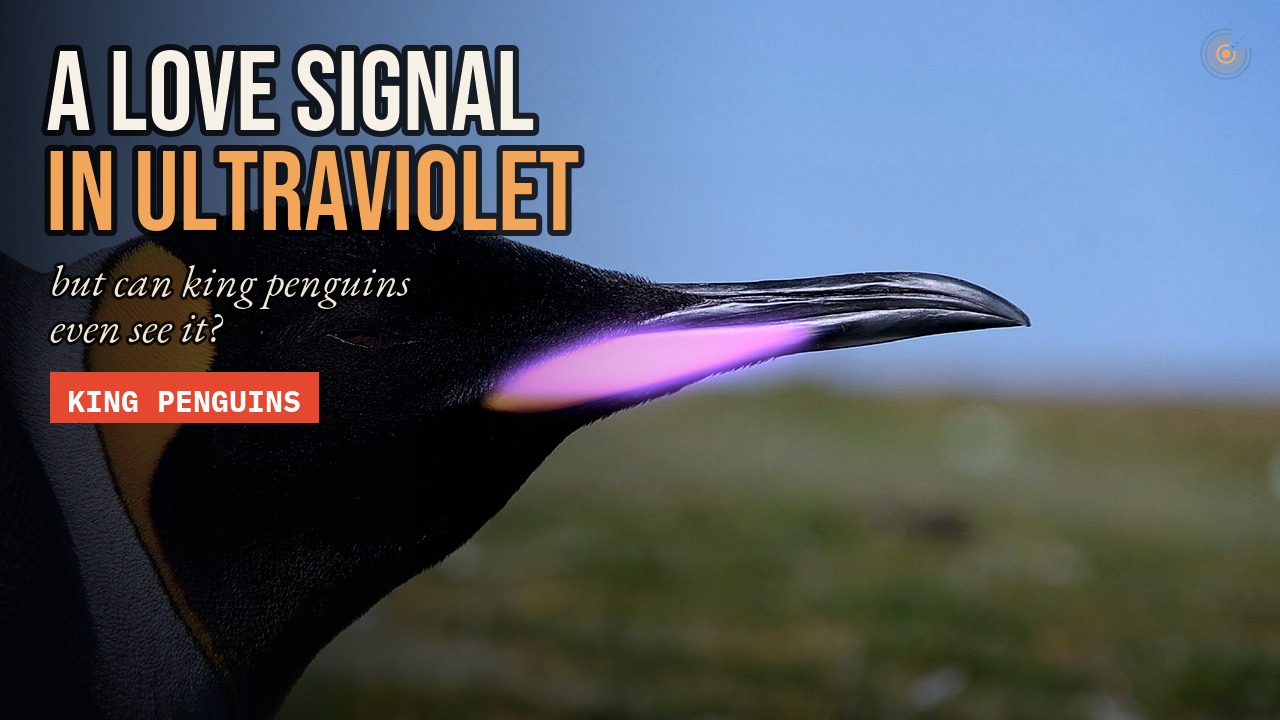
A soap bubble is the everyday example: its swirling colours change as the soap film thins. The blue of a morpho butterfly, the sheen of a peacock feather and the ultraviolet glow of a king penguin's beak spot all work the same way. In the penguin, the reflection peaks at about 367.5 nanometres, in the ultraviolet.
Because the colour depends on the spacing, changing the structure changes the colour: when researchers removed about a sixth of a penguin's beak horn, the peak shifted, and when they removed more than a third it disappeared.
A common misconception is that every bright animal colour comes from pigment. Many blues and iridescent colours in nature contain no blue pigment at all; grind them up and the colour vanishes.