Orbital velocity
The sideways speed an object needs to keep falling around a planet without ever hitting it: about 7.9 km/s just above Earth.
Being in orbit does not mean escaping gravity. In low orbit gravity is almost as strong as on the ground. An orbiting object is falling all the time, but it is also moving sideways so fast that the curved ground drops away beneath it as quickly as it falls.
Isaac Newton described this with a thought experiment: a cannon on a very high mountain. Fire the ball slowly and it lands nearby; fire it faster and it lands further away; fire it at about 7.9 km/s and it never lands at all. That is the orbital velocity for a circular orbit just above Earth's surface. Higher orbits need less speed: the International Space Station, about 400 km up, travels at roughly 7.7 km/s.
A common misconception is that astronauts float because there is no gravity in space. They float because they and their spacecraft are falling together.
Leaving orbit means getting rid of that speed, which is why re-entry is so hot.
See it in action
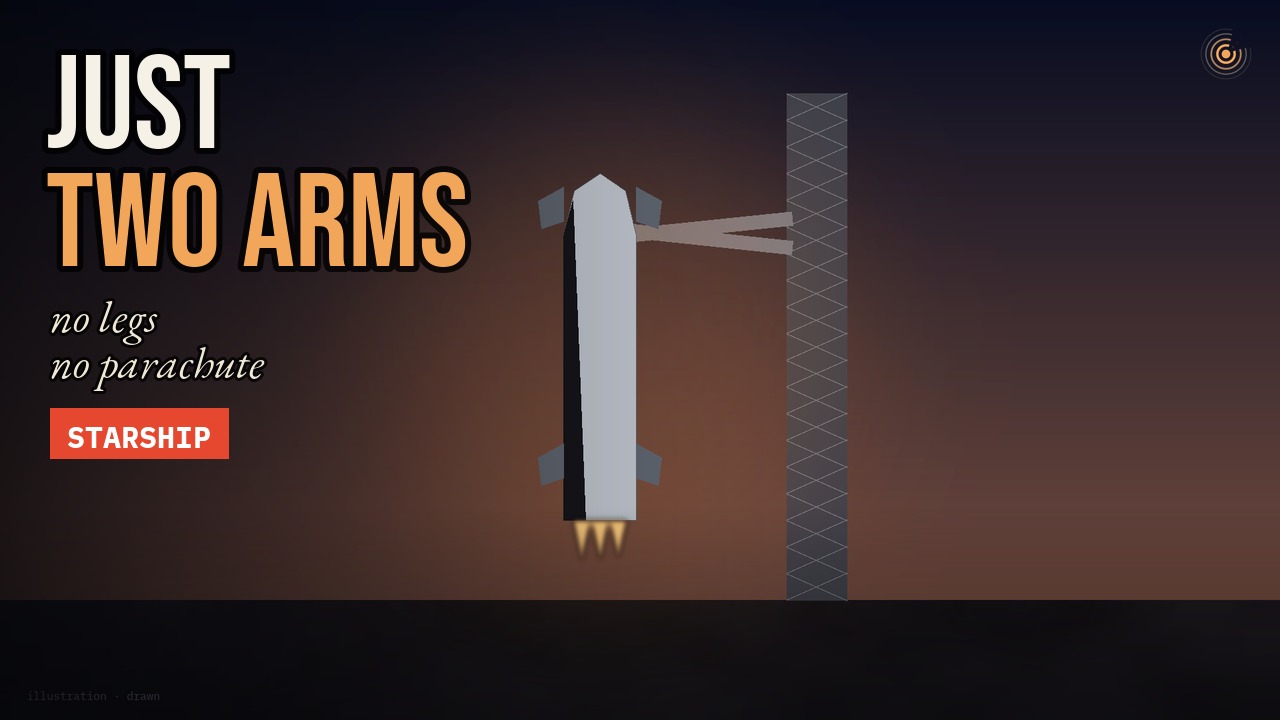 Watch nowStarship Was Caught From Orbit. Here's the Physics14 Nov 2026 · Starbase, Texas (and 1960-2026: Corona, Shuttle, DC-X, Falcon 9)
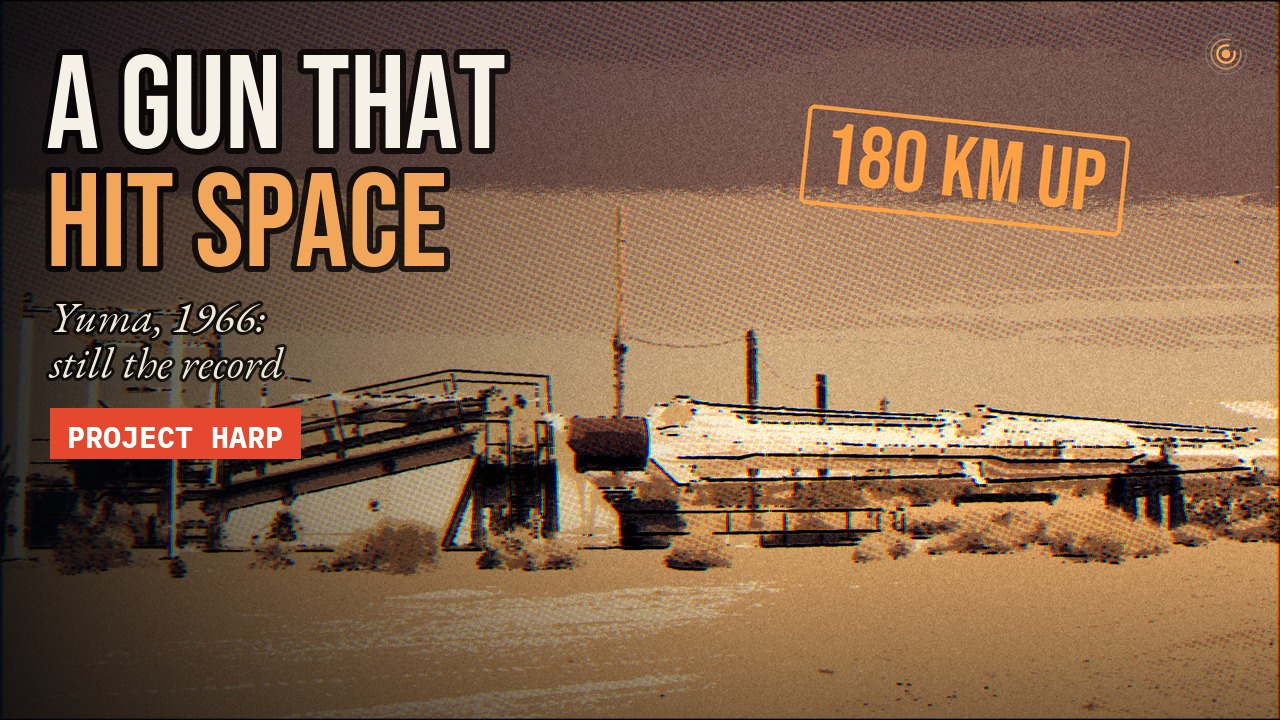 Watch nowThe Cannon That Tried to Shoot Into Space18 November 1966 · Yuma, Arizona (Project HARP, 1962–1967)
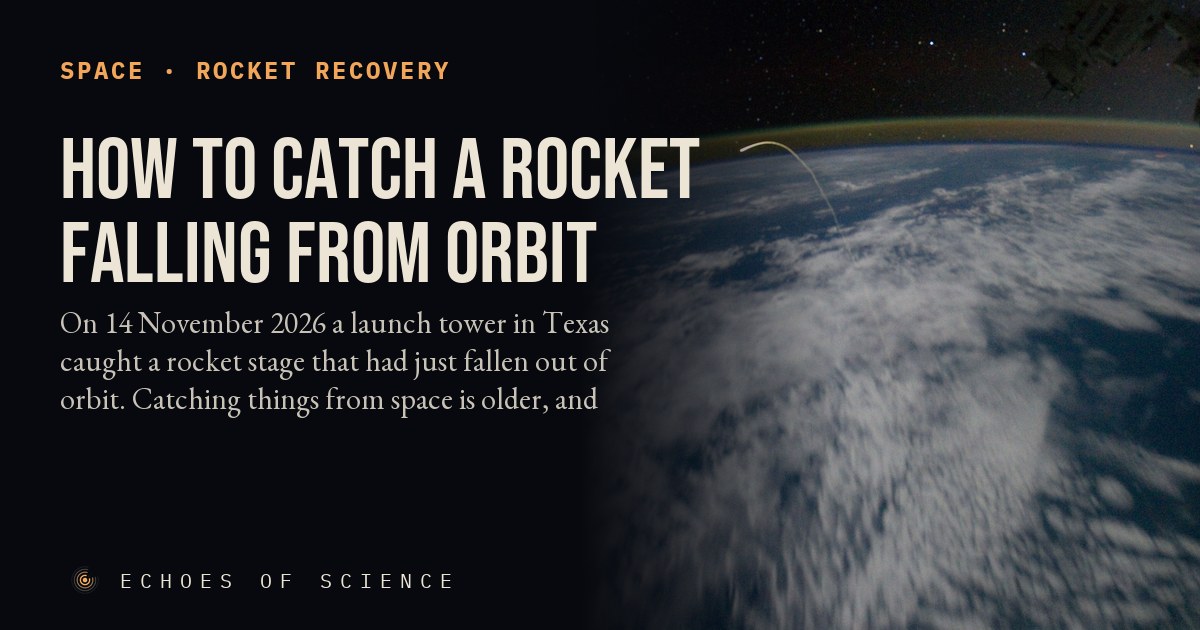 Coming soonHow to Catch a Rocket Falling From Orbit14 Nov 2026 · Starbase, Texas