Voyager 1 Is One Light-Day Away. NASA Still Fixes Its 1977 Computer
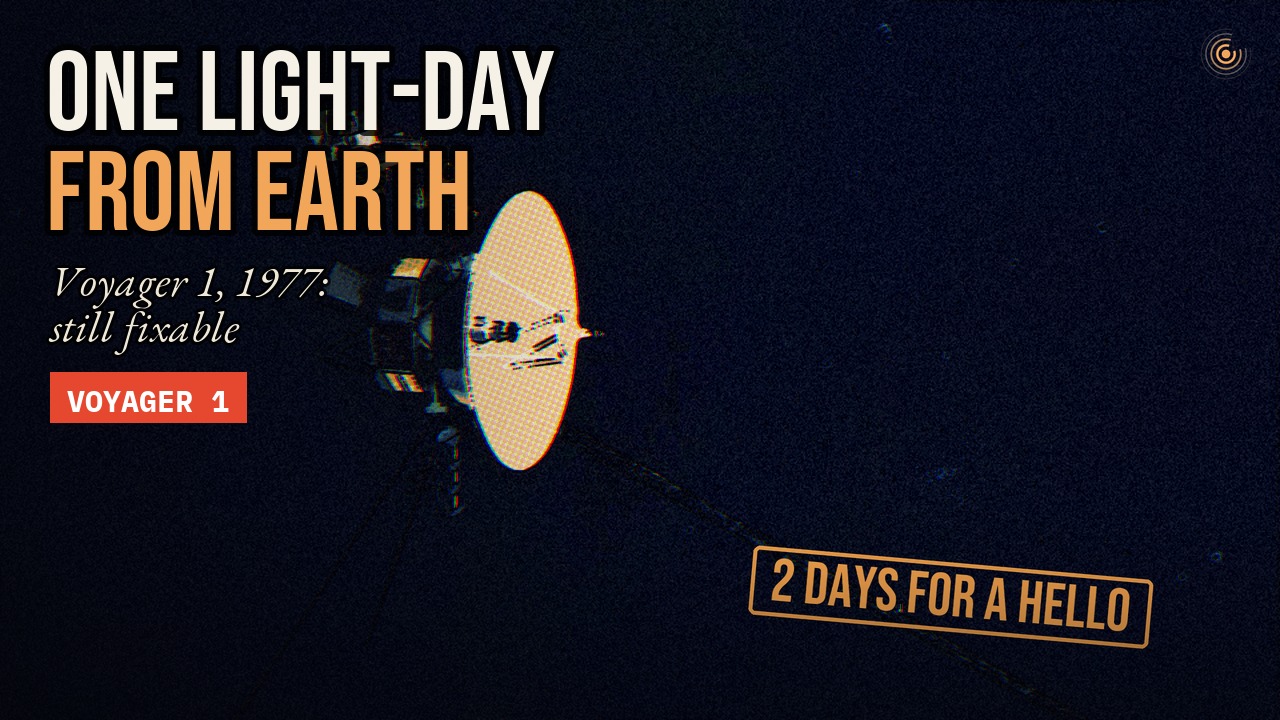
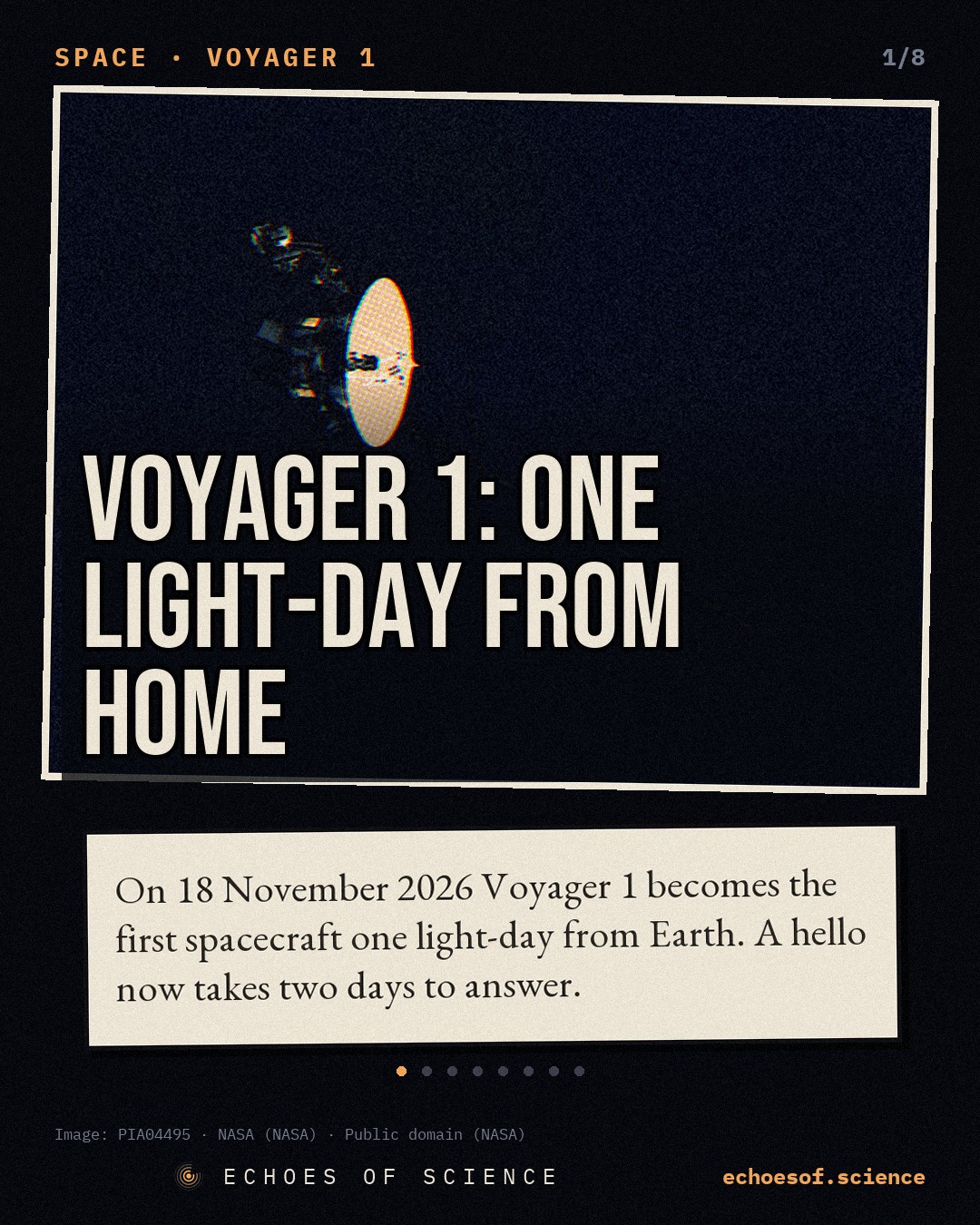
On 18 November 2026 Voyager 1 becomes the first spacecraft one light-day from Earth: a hello now takes two days to answer. In 2023 its 1977 flight data computer started sending gibberish; a 'poke' made it dump its whole memory, which pointed to one dead chip, and JPL cut the code into pieces to fit the gaps that still worked.
 The documentary is coming soon to YouTube · subscribe to get it
Say hello to this spacecraft today, and you will wait two whole days for the answer.
On 18 November, Voyager 1 becomes the first thing humans have ever built to be one light-day from Earth.
It was launched in 1977. And three years ago, its computer started talking nonsense.
Engineers fixed it anyway. They could not touch it, and every test took almost two days to answer. So how do you repair a machine like that?
The Gibberish
14 November 2023. The big dishes of NASA's Deep Space Network are listening, as they have for 46 years.
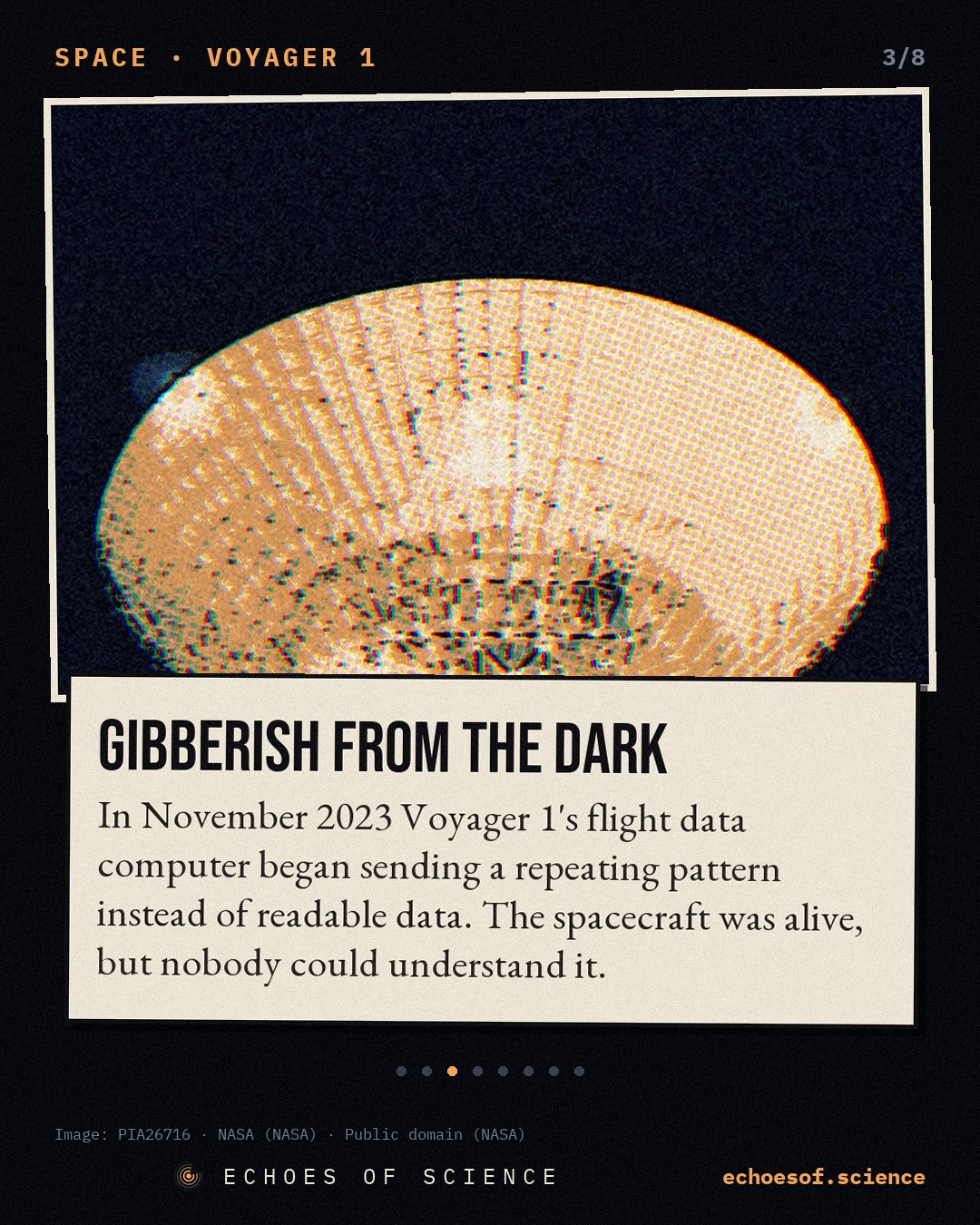
The signal from Voyager 1 is there, steady as ever. The radio works. But what it carries is gibberish. A repeating pattern of ones and zeros, like a dial tone.
No science. No health report. Nothing the team could read. One of the spacecraft's three computers had lost its mind.
It was the flight data system: the part that gathers the readings from every instrument and packs them up to send home.
The obvious fix was the oldest one in computing. Switch it off, and on again. They tried. Nothing changed. The spacecraft was alive, and it could not tell anyone how it was.
So why was something so simple so hard to fix? The answer starts in nineteen seventy-seven.
A Machine from 1977
Voyager 1 left Florida on 5 September 1977. Its job was a grand tour of the giant planets.
In 1979 it flew past Jupiter, and found volcanoes erupting on its moon Io. In 1980 it swept past Saturn, and then out of the plane of the planets for good.
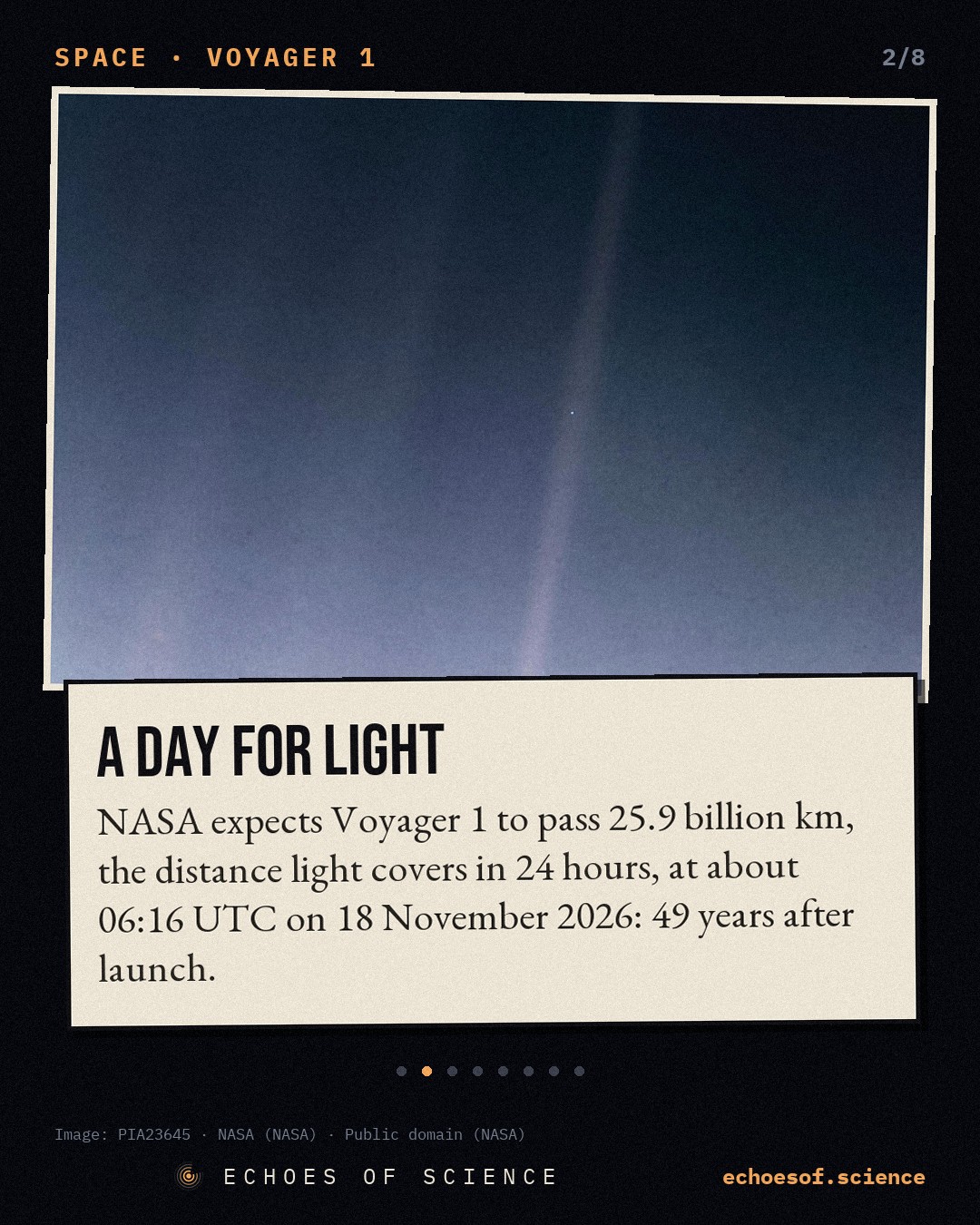
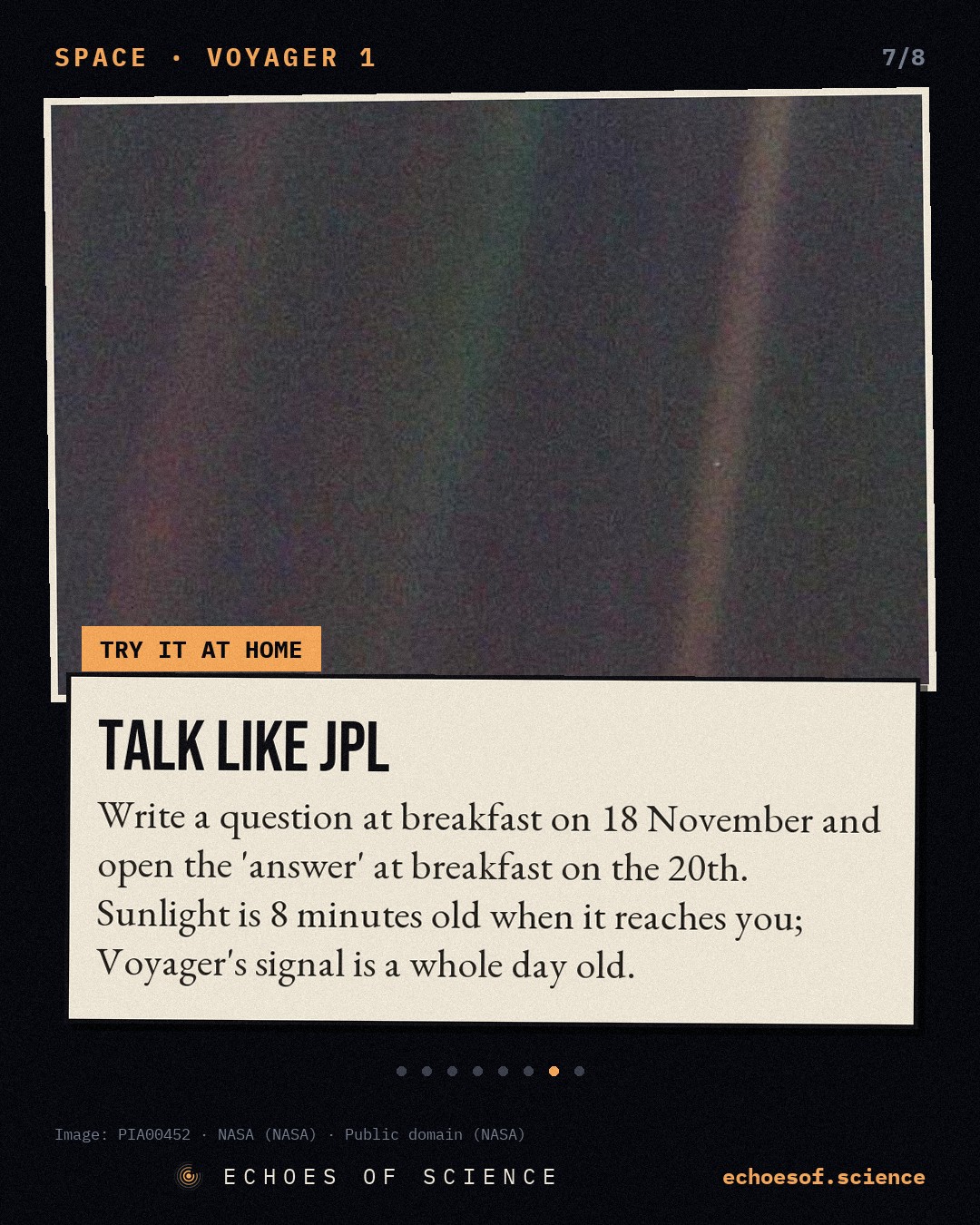
In 1990, it turned round and took the famous Pale Blue Dot: our whole world, less than a pixel wide, in a sunbeam.
In 2012 it crossed the heliopause, the edge of the Sun's bubble of wind, into interstellar space. It is still going, at about 61,000 kilometres an hour.
All of this runs on computers designed in the early 1970s. By one account, each of them has about 70 kilobytes of memory. Less than a single photo on your phone.
They are programmed in assembly language, instruction by instruction. Many of the people who first wrote that code have retired. Some of what they knew survives only on paper.
Finding the fault meant going back through old memos. Project scientist Linda Spilker compared it to an archaeological dig. But first, the team had to see inside the computer. How do you ask a broken machine to show you its memory?
The Poke
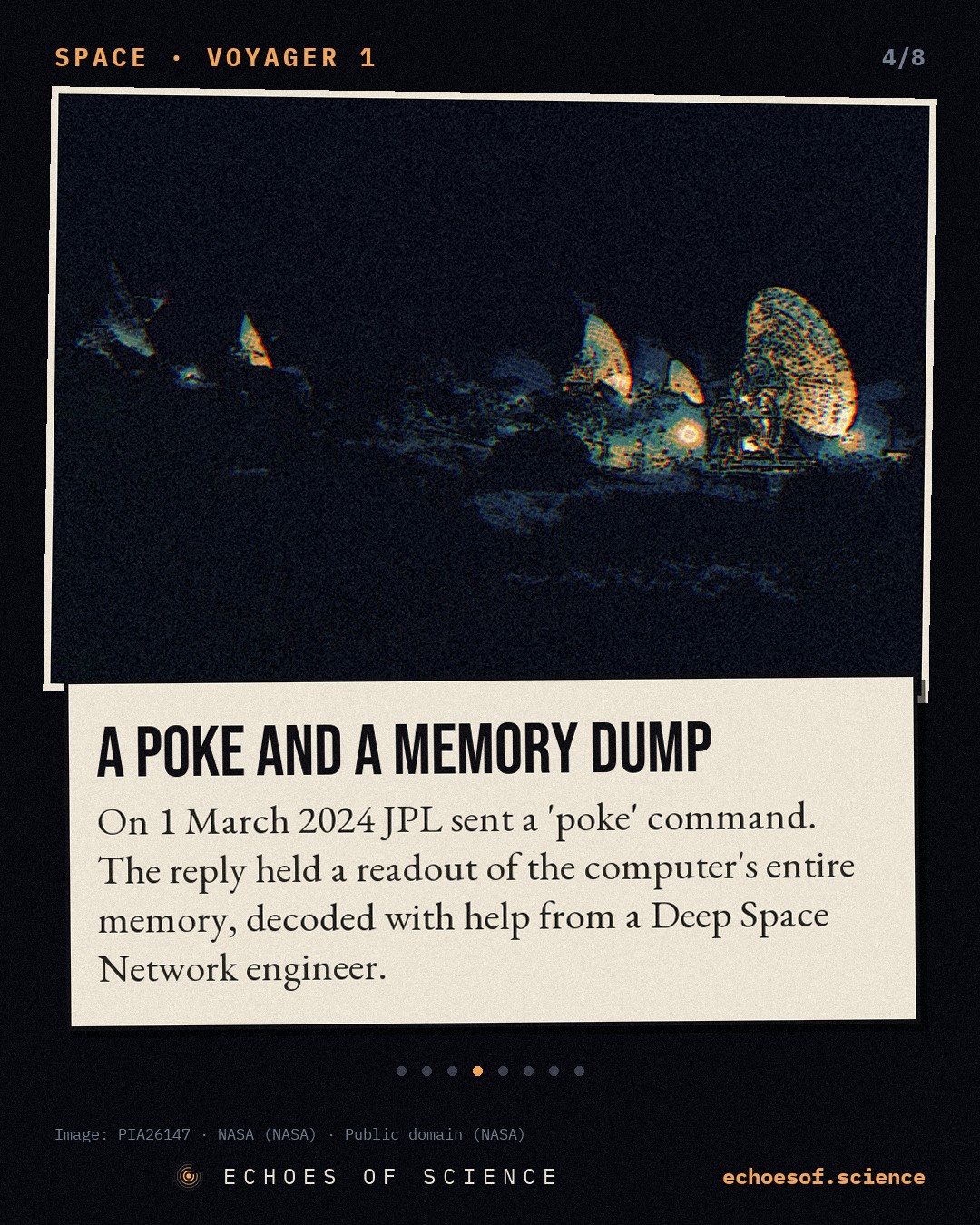
On 1 March 2024, they sent a carefully chosen command. They called it a poke.
It told the flight data system to run through its software in a different order. If one part was broken, perhaps the computer could step around it.
Then they waited. 22.5 hours for the command to arrive. 22.5 hours for any answer to come back.
On 3 March, something changed. One part of the signal looked different from the rest of the gibberish. Still not in Voyager's normal format, but different.
An engineer with the Deep Space Network decoded it. It was a readout of the computer's entire memory. Every instruction, every value, sent back from 24 billion kilometres away.
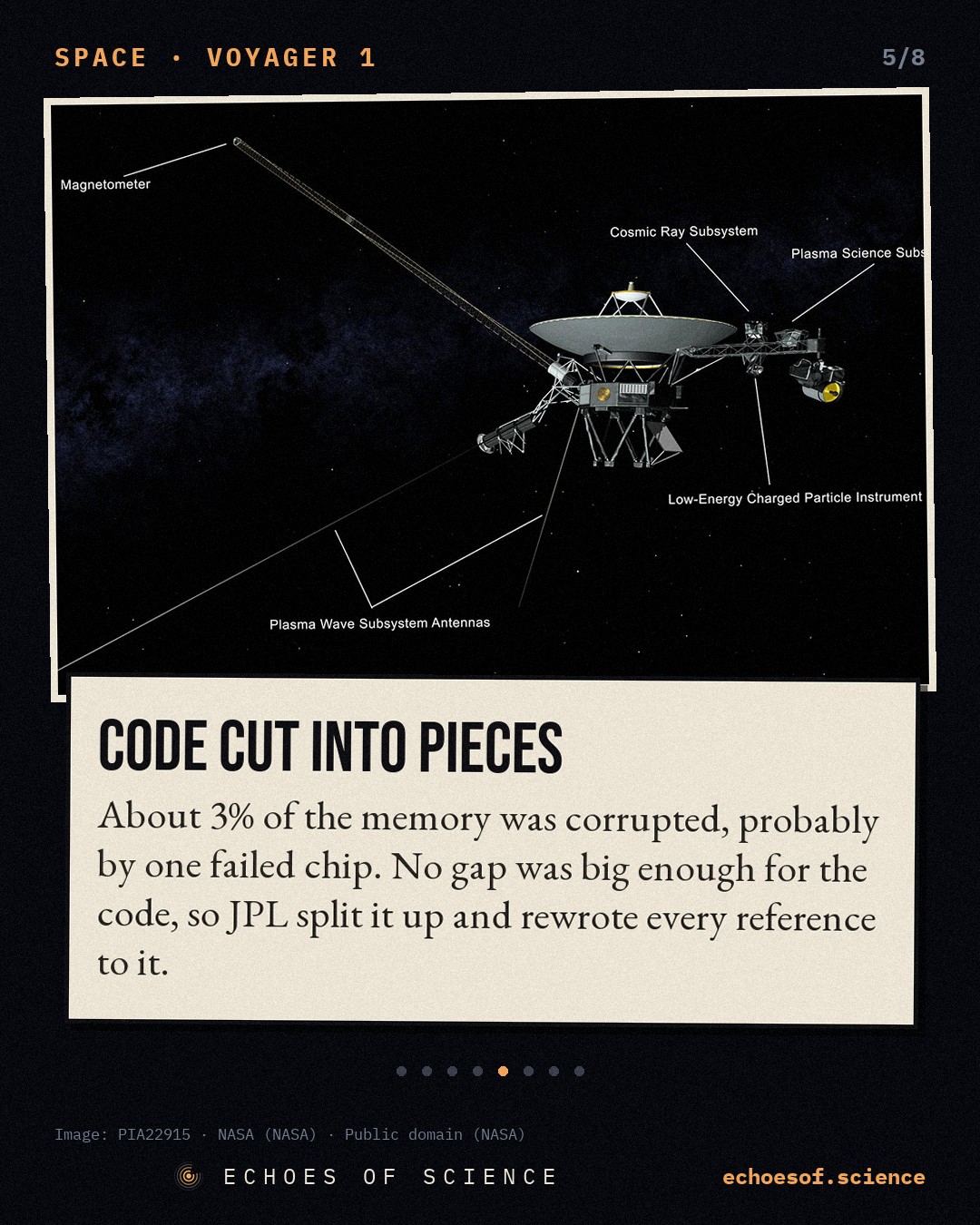
The team compared it with a copy from before the trouble began. The differences pointed to one place. About 3% of the memory was corrupted, most likely on a single chip.
A piece of hardware had failed. Nobody knows for certain why. Age, perhaps, after 46 years. Or a single energetic particle from space. Either way, a chip cannot be replaced from Earth. So could the code live somewhere else?
The Puzzle
That chip held code the computer needed. The plan was to move that code into memory that still worked. It would not fit.
There was no free space large enough to hold it in one piece. Memory was so tight that the team had to decide what could be overwritten.
So the engineers cut the code into several pieces, each small enough to fit into a different gap. Then they rewrote each piece so that, together, the pieces still worked as one.
Then came the trap. Code is full of addresses: instructions that say, go to this exact place in memory. Move a piece, and every address that points to it must change. Miss just one, and the computer jumps into the wrong code.
And after every attempt, they would wait almost two days to find out.
They started small: the code that packages the spacecraft's health report. On 18 April 2024, the command left the dishes. Then the wait began again.
Two days later, the answer arrived. Readable data. For the first time in five months, Voyager 1 was telling its team how it was.
Over the next weeks they moved the rest. On 19 May, they sent the command for the science data. By June, all four working instruments were reporting again, from interstellar space. And all the while, the wait for every answer kept growing.
How Do We Know?
Most of this story comes from NASA's own mission updates, written as it happened. Each step left a date: when a command left, when an answer came back.
Some things are not public. We do not know exactly how many pieces the code was cut into, or how much of it was moved. And the cause of the failure is still unknown.
But one number in this story is not in doubt at all: the delay. And that comes straight from the speed of light.
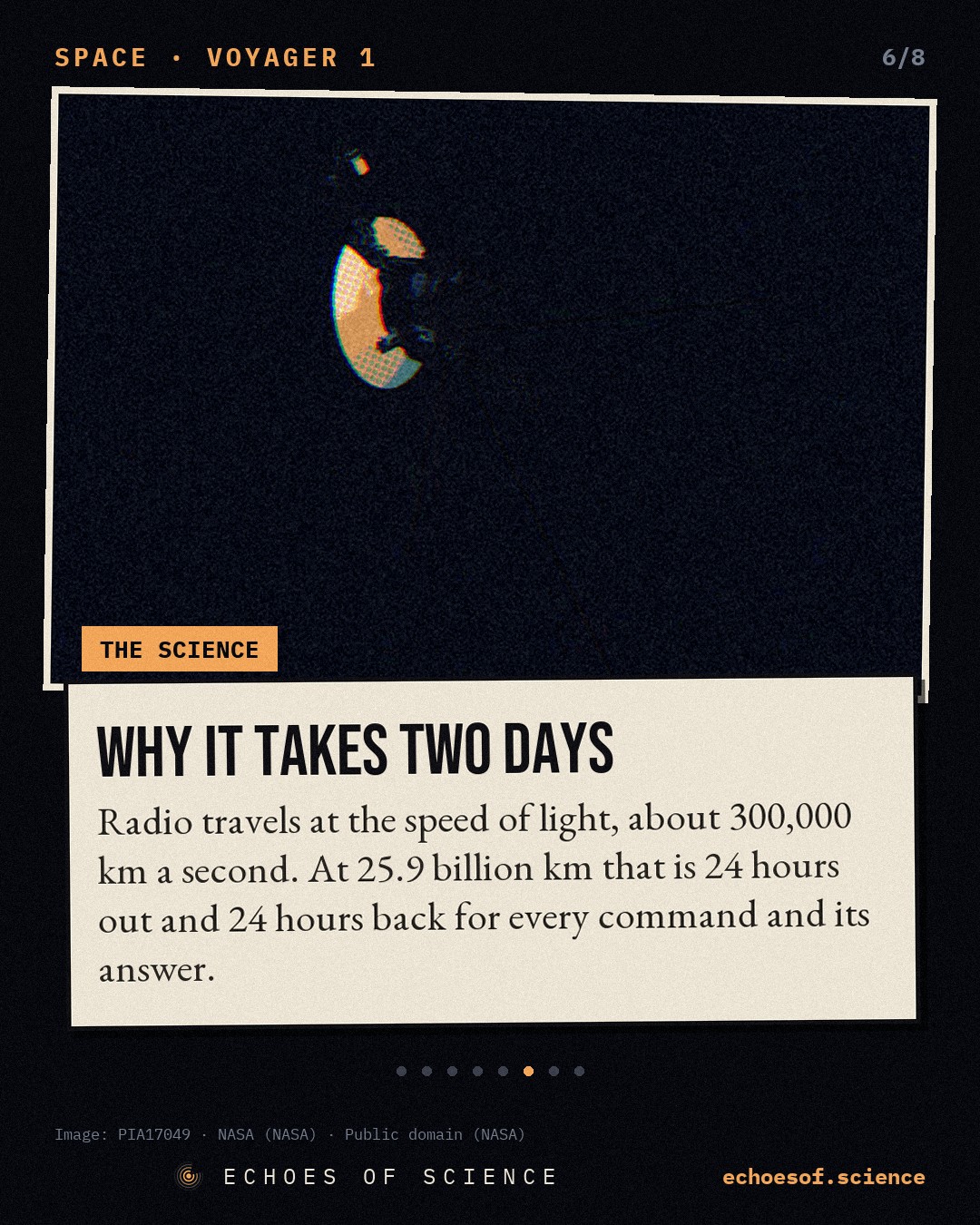
Radio waves travel at the speed of light: almost 300,000 kilometres every second. In one day, light covers about 25.9 billion kilometres. That distance is one light-day.
By NASA's calculation, Voyager 1 reaches it at about 06:16 universal time on 18 November 2026. 49 years after launch.
Nothing happens to the spacecraft at that moment. There is no line in space. But a hello now takes about a day to arrive, and the reply another day to come back. So how is the old machine coping, this far out?
Today
And Voyager is still causing surprises. On 18 and 19 October, the dishes heard nothing at all.
On 20 October, the signal came back by itself. A set of thrusters had stopped, and the spacecraft had switched to its backups on its own. Engineers are still working out why.
Its power is fading too. Its nuclear generators lose about 4 watts every year, so instruments are being switched off, one by one, to keep the rest alive.
Project manager Suzanne Dodd puts it simply.
If you want to say hello to Voyager, you send your message, and then you go home.
That is why this rescue matters beyond Voyager. Every mission that goes further, to the outer planets, or one day to the stars, will face the same problem. Light is the fastest messenger there is, and it is still too slow for a conversation.
The machines out there will have to look after themselves. And the people at home will need code, and records, that someone can still understand 50 years later.
In 1990, Voyager 1 looked back and saw the Earth as a pale blue dot. 36 years on, that dot is still talking to it.
A computer from 1977, one light-day from home. Still listening.
Next time: the night it rained stars on America, in 1833. And on our website, play Memory Tetris: fit Voyager's code into broken memory, and beat the two-day wait.
The science in this story
Key facts
- NASA expects Voyager 1 to reach one light-day from Earth (about 25.9 billion km, 173 AU) at about 06:16 UTC on 18 November 2026, 49 years, 2 months and 11 days after its launch on 5 September 1977. source ↗
- From November 2023 Voyager 1's flight data subsystem sent back a repeating, unusable pattern instead of readable data. source ↗
- A 'poke' command sent on 1 March 2024 produced a reply on 3 March; with help from a Deep Space Network engineer, the team found by 10 March that it contained a readout of the entire FDS memory. source ↗
- About 3% of the FDS memory was corrupted, most likely because a single memory chip had failed; NASA said it may have been hit by an energetic particle or worn out after 46 years. source ↗
- No single location could hold the affected code, so JPL split it into sections stored in different places; the first piece was sent on 18 April 2024 and confirmed working on 20 April. A signal then took about 22.5 hours each way. source ↗
- A second step on 19 May 2024 restored science data; by mid-June all four working instruments were returning usable data. source ↗
- Voyager's plutonium power supply loses about 4 watts a year; NASA switched off Voyager 1's cosmic ray subsystem on 25 February 2025 to save power. source ↗
- On 18-19 October 2026 no signal was received from Voyager 1; contact returned on 20 October after the spacecraft switched to backup thrusters on its own. The cause is not yet known. source ↗
In pictures

Loading the quiz…
Sources
- NASA/JPL Voyager mission updates (Mar, Apr, Jun 2024; Nov 2026) · EarthSky: Voyager 1 one light-day (2026)
- IEEE Spectrum: how NASA fixed Voyager 1 (2024) · The Register (Apr 2024)
- ScienceAlert (Apr 2024) · IFLScience / ScienceDaily (Oct–Nov 2026)
- All pictures: NASA Image and Video Library (NASA/JPL-Caltech), public domain
Where every picture, clip and sound in this story comes from
Keep scrolling: more true stories ↓
New mini-documentaries every week and a true story every day. Pick where you like to watch:
▶ Subscribe on YouTube Telegram TikTok Instagram Bluesky Threads ✉ Weekly email