Aurora
Curtains of light in the night sky made when charged particles from the Sun strike oxygen and nitrogen in the upper atmosphere.
An aurora is light given off by the upper atmosphere when it is struck by energetic charged particles, mostly electrons, guided in by Earth's magnetic field. The energy comes ultimately from the Sun, through the solar wind and eruptions such as coronal mass ejections. When the particles collide with atoms and molecules of oxygen and nitrogen they lift them into excited states, and the gas releases the extra energy as light, much as in a neon sign.
The colour depends on which gas glows and at what height. Oxygen gives the familiar green, up to about 150 miles (240 km) high, and a deep red above that. Nitrogen adds blue and purple tints lower down. Altogether the display lies roughly 20 to 200 miles (30 to 320 km) above the ground, far above any weather.
Aurorae usually appear in two rings, the auroral ovals, centred on the magnetic poles and roughly following the Arctic and Antarctic circles: the aurora borealis or northern lights in the north, and the aurora australis in the south. During strong geomagnetic storms the ovals swell towards the equator and the lights can be seen far from the poles.
An old idea held that aurorae were sunlight reflected off polar ice or clouds. In fact they are glowing gas, lit from within by particle collisions, which is also why they are so far above the clouds.
See it in action
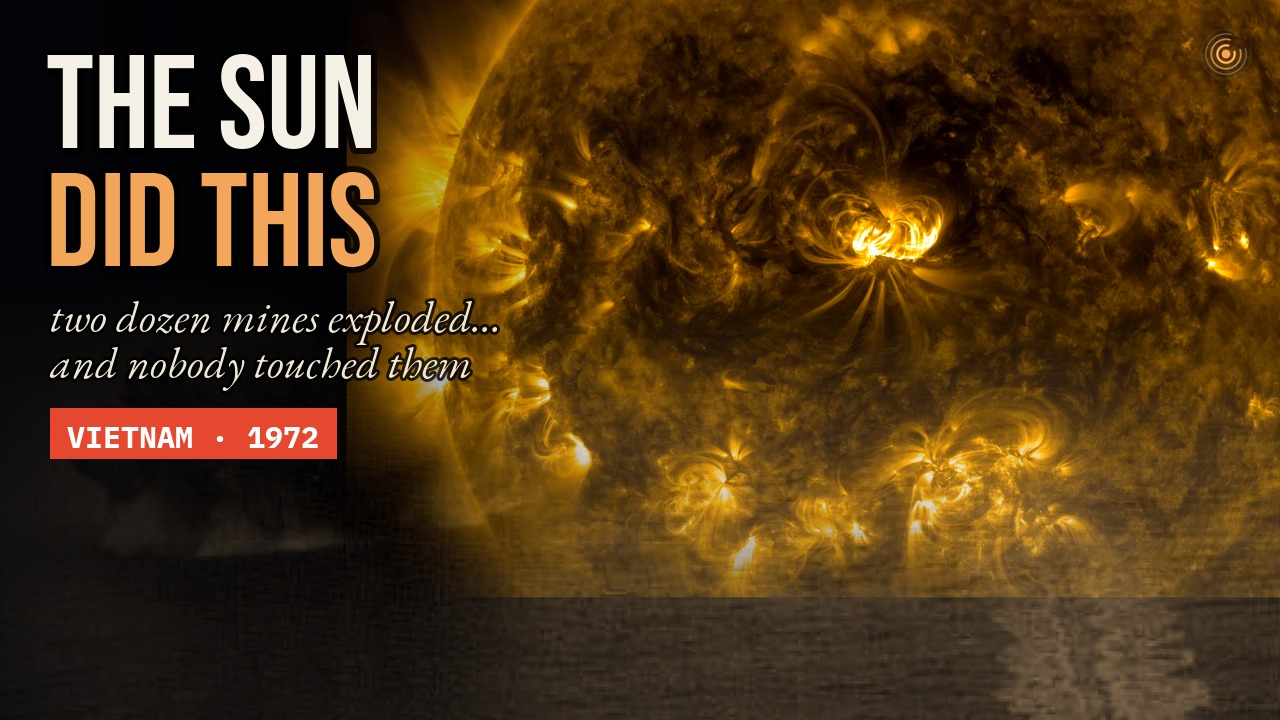 Watch nowThe Day the Sun Blew Up a Minefield4 Aug 1972 · Hon La, North Vietnam
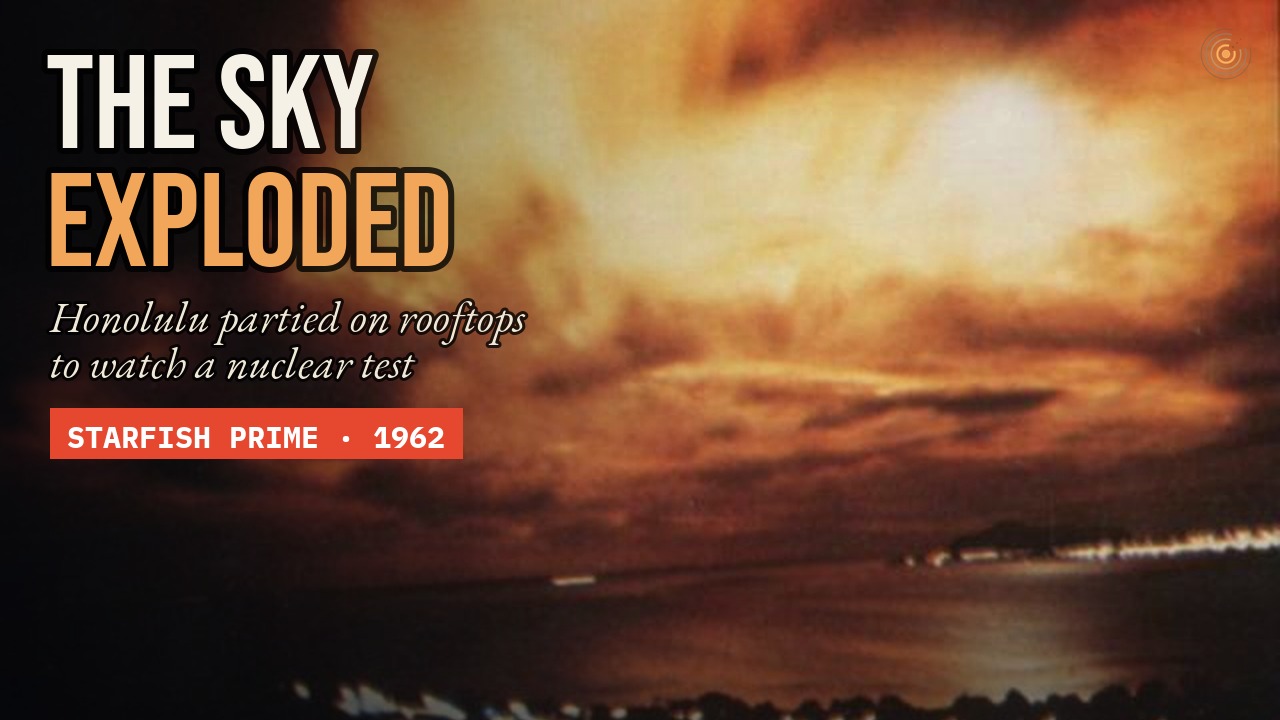 Watch nowThe Night America Nuked the Sky8 Jul 1962, 11 pm Honolulu time · 400 km above Johnston Island
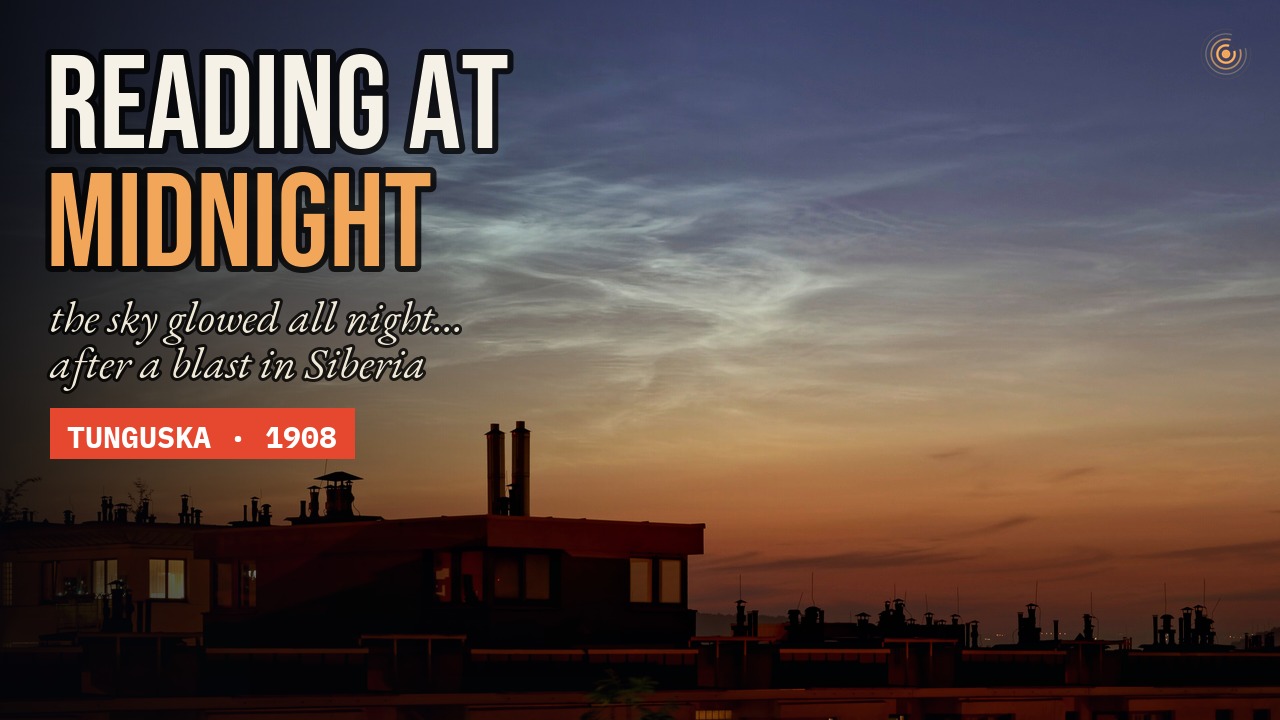 Premieres 11 NovThe Summer Nights You Could Read By30 Jun – 3 Jul 1908 · Europe, after Tunguska
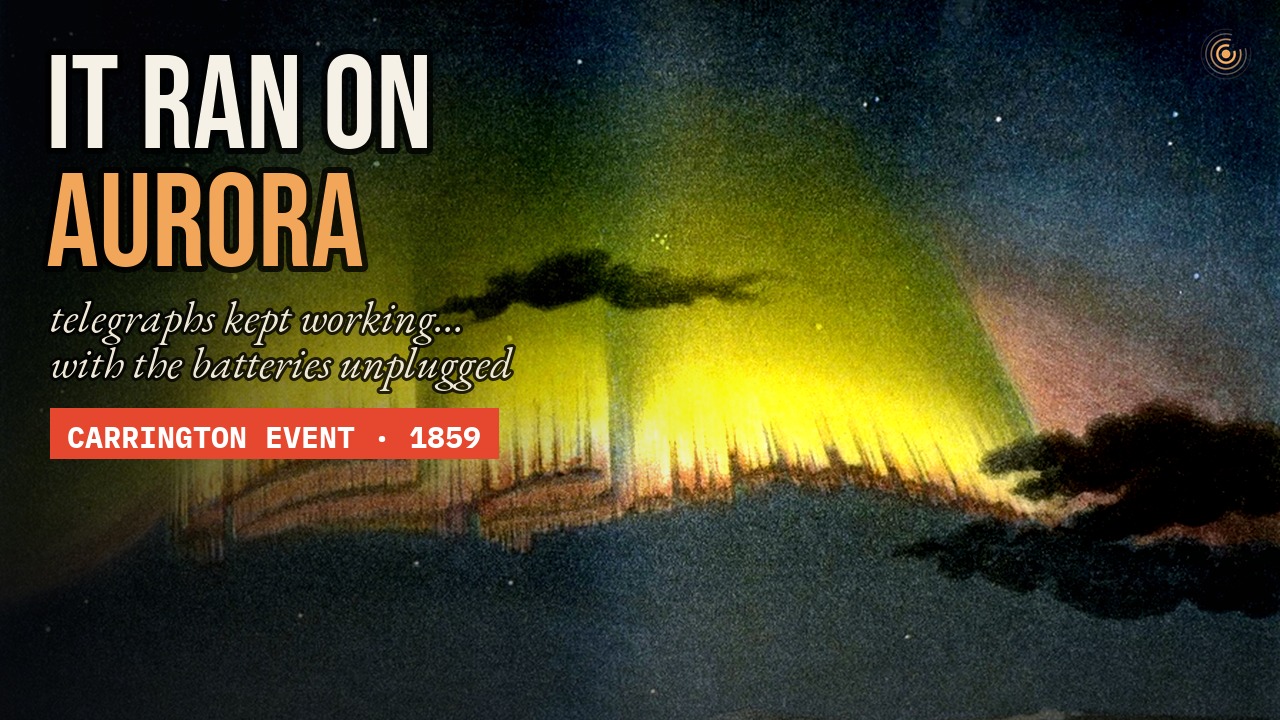 Premieres 17 NovThe Telegraph That Ran on Aurora2 Sep 1859 · Boston–Portland
 Coming soonThis Knowledge Was Free All Along1968–2026 · public archives worldwide
Coming up in future stories
- Aurora Hunters Found a Light Called Steve 2016–2018 · Alberta and Saskatchewan, Canada
- The Solar Storm That Sent Tractors in Circles 10–12 May 2024 · US Midwest and Great Plains