Coronal mass ejection
A huge cloud of magnetised plasma blasted from the Sun's outer atmosphere; when one hits Earth it can set off a geomagnetic storm.
A coronal mass ejection (CME) is an eruption in which the Sun throws off a vast bubble of plasma, electrically charged gas, together with the magnetic field threaded through it. A single CME can hurl billions of tonnes of material from the corona, the Sun's thin outer atmosphere, into space.
CMEs travel at anything from under 250 kilometres per second to nearly 3,000. The fastest ones aimed at us can cross the 150 million kilometres to Earth in as little as 15 to 18 hours; slower ones take several days. When one arrives with its magnetic field pointing southward, it couples strongly to Earth's field and drives a geomagnetic storm, with bright aurorae and induced currents in power lines and cables.
CMEs are often confused with solar flares. The two frequently happen together, but they are different things. A flare is a sudden flash of electromagnetic radiation, including light and X-rays, which reaches Earth in about eight minutes. A CME is a physical cloud of matter that takes hours or days to arrive. The flash can disturb radio signals almost at once; the storm comes later, when the cloud hits.
That delay is useful. Spacecraft watching the Sun can see a CME leave and give forecasters many hours, sometimes days, of warning.
See it in action
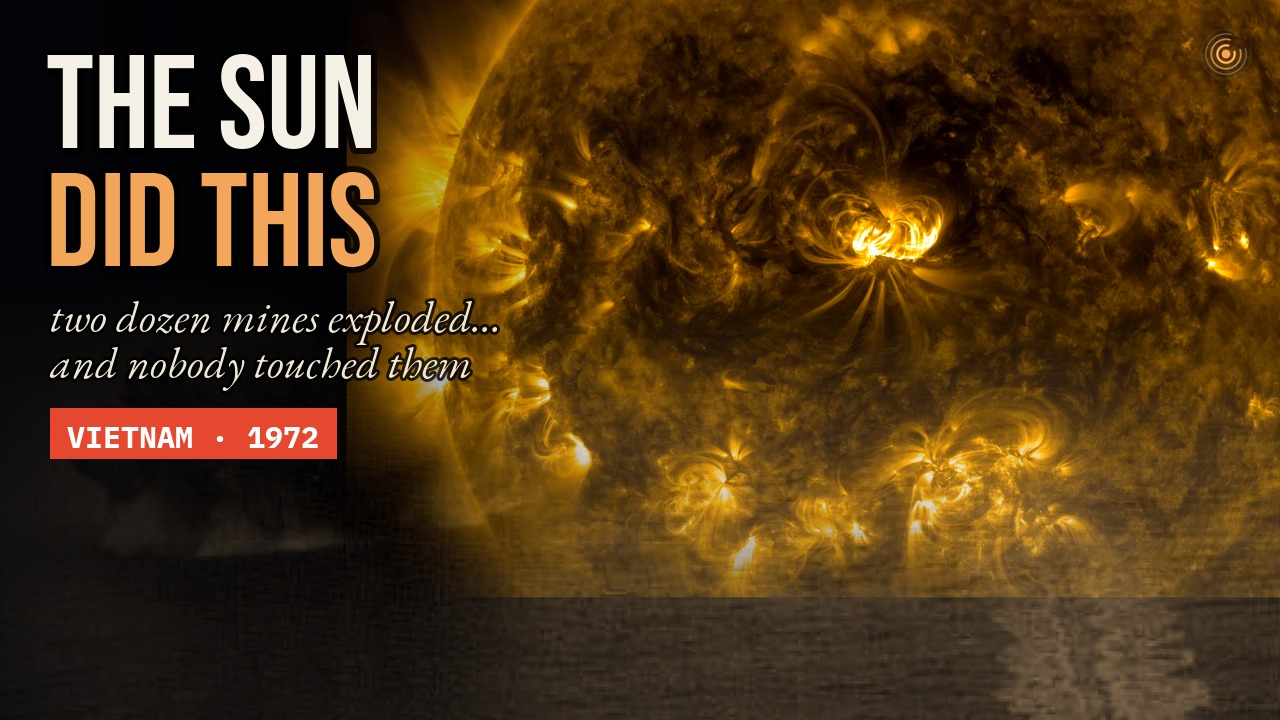 Watch nowThe Day the Sun Blew Up a Minefield4 Aug 1972 · Hon La, North Vietnam
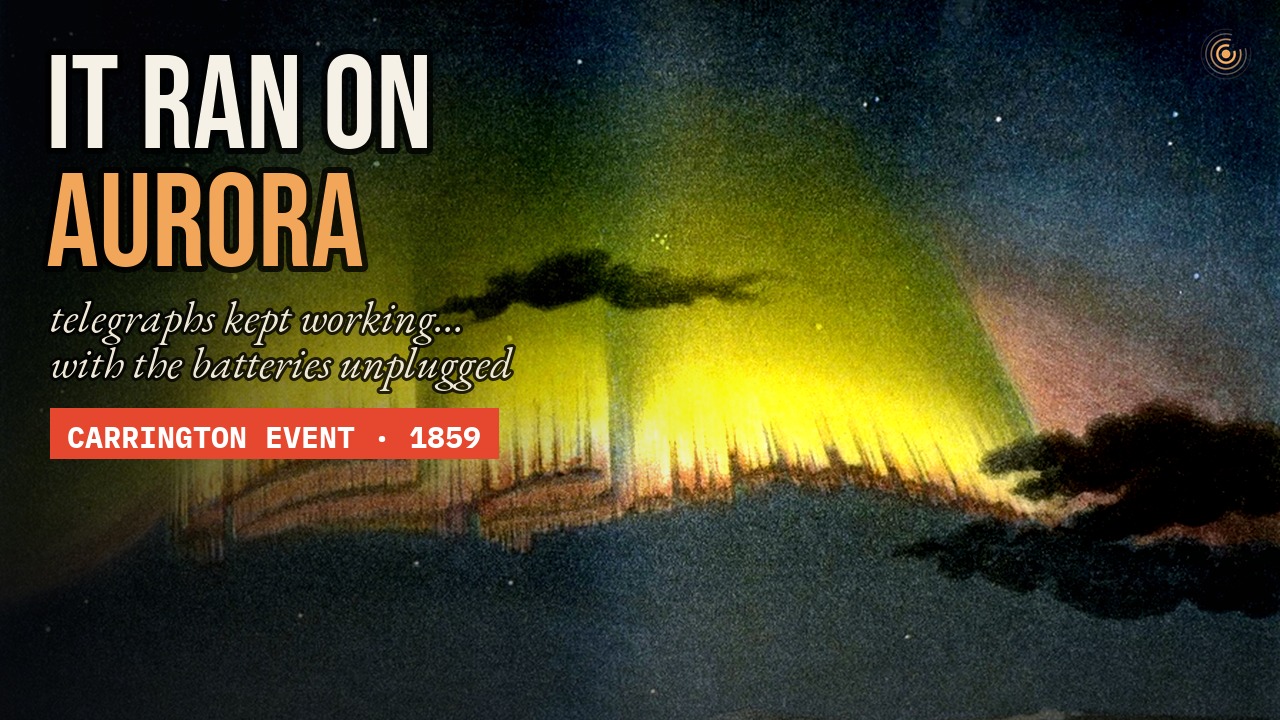 Premieres 17 NovThe Telegraph That Ran on Aurora2 Sep 1859 · Boston–Portland