Planetary differentiation
How a young, molten planet sorts itself into layers: heavy iron sinks to make a core, lighter rock floats up as mantle and crust.
Planetary differentiation is the sorting of a planet into layers by density. Young rocky planets were heated by collisions and by radioactive elements until much of their interior melted. In the melt, heavy iron (with some nickel and sulphur) sank towards the centre and formed a core; lighter rock rose above it as the mantle, and the lightest material froze into a crust.
An everyday picture: shake a jar of muddy water and leave it. The heavy grains settle at the bottom, the light ones last. In a molten planet the same thing happens with metal and rock, only over millions of years.
The result sets a planet's density. Earth's core holds about a third of its mass and reaches a little more than halfway to the surface; Mercury's reaches about 85% of the way out, which is why scientists ask what happened to its rock.
A common misconception is that a planet's core is simply the oldest rock. It is not rock at all: it is mostly iron metal, and on Earth and Mercury part of it is still liquid.
See it in action
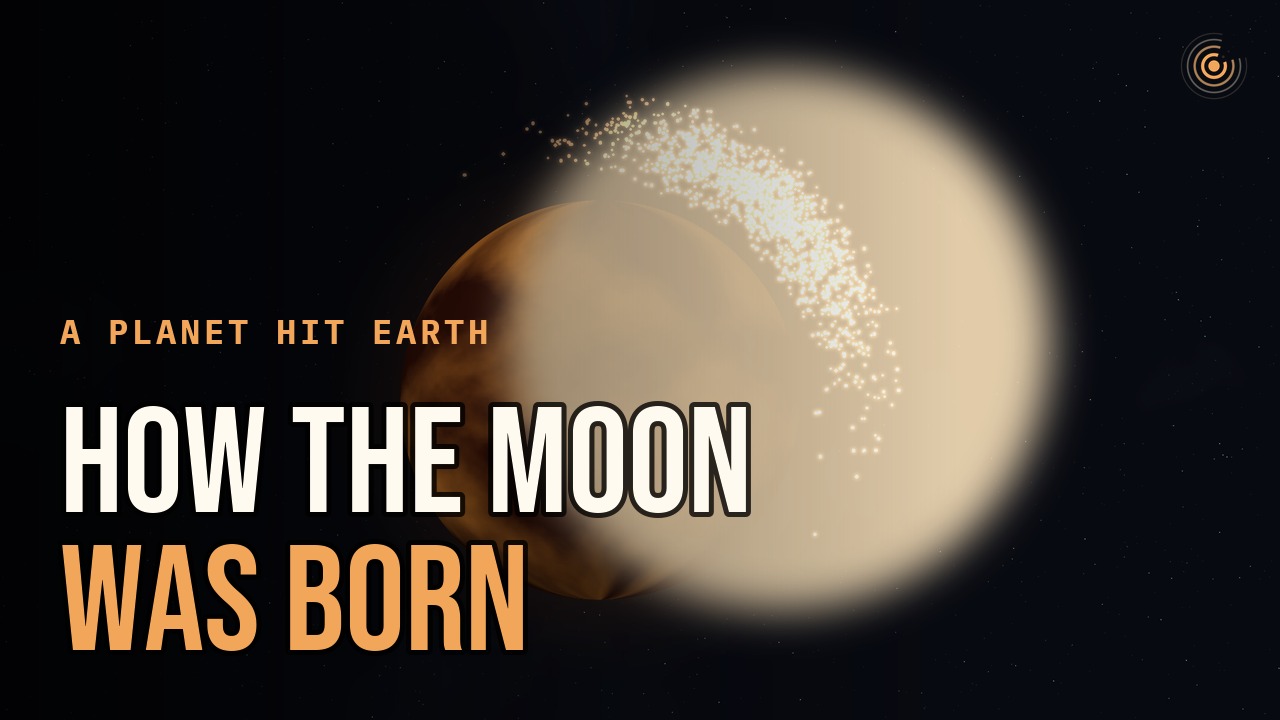 Watch nowHow the Moon Was BornAbout 4.5 billion years ago · Earth and Moon
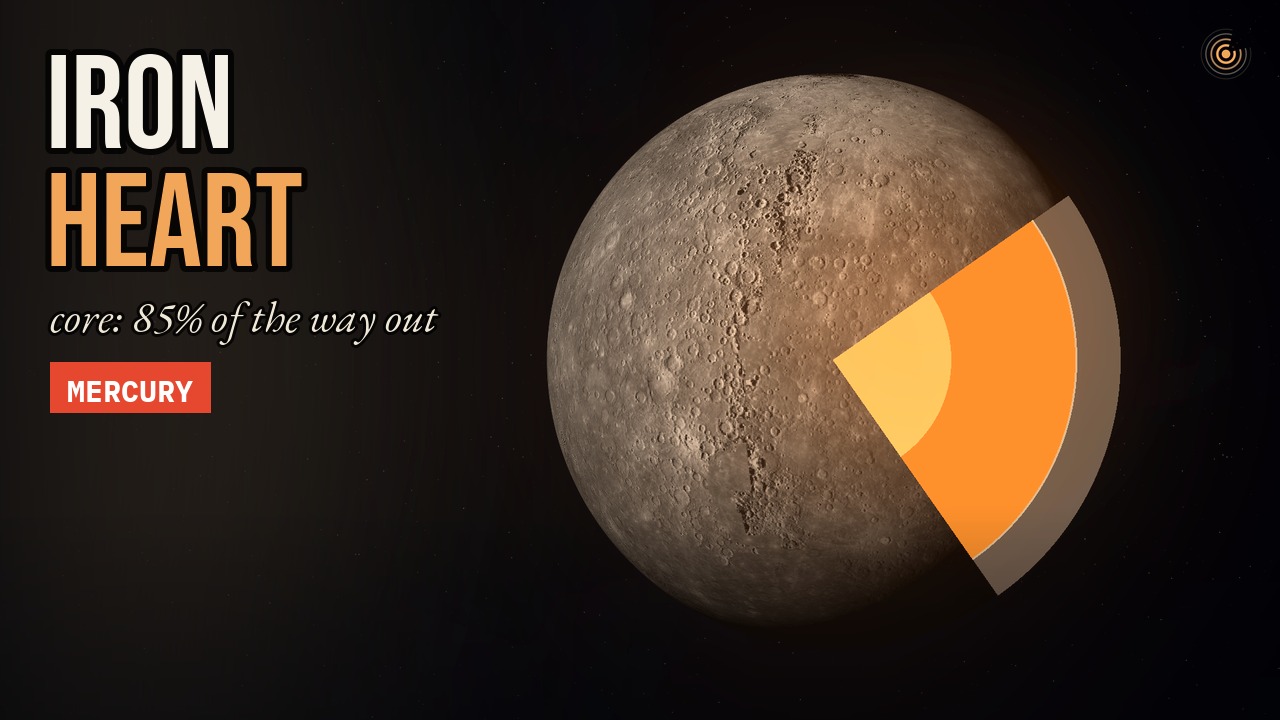 Watch nowMercury Is Mostly Metal. Nobody Knows Why4.6 billion years ago · 1965-2026 (Arecibo, Mariner 10, MESSENGER, BepiColombo)
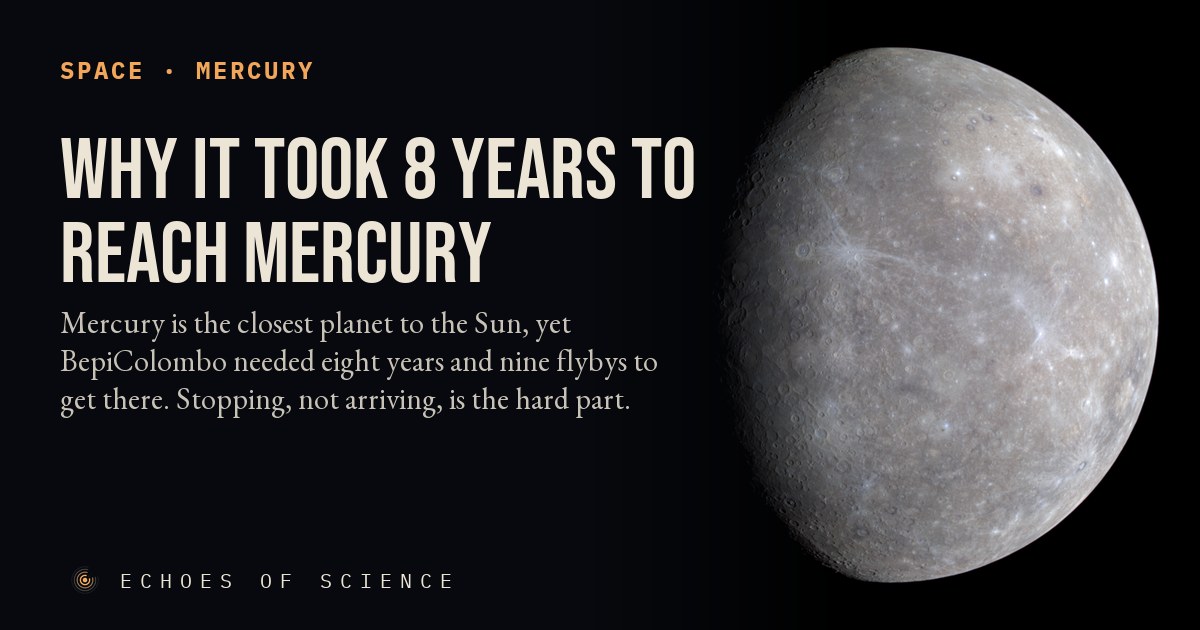 Coming soonWhy It Took 8 Years to Reach Mercury2018–2026 · BepiColombo (ESA/JAXA), launched 20 Oct 2018; capture at Mercury scheduled 21 Nov 2026